James Lasley has been mentioned several times throughout this history. He is someone who becomes very notable. His connection with the Cherokee people is strong, yet it has not been explained before. He is a white man married to a Cherokee woman. He was married to two Cherokee women at different times. He did not like the United States. He preferred the Cherokees and their way of life. He was an entrepreneur. He brought many trades to the Cherokee people that became useful. He was very wealthy. He was connected to Major Ridge’s family. He was very good friends with Chief Pathkiller and his family. He was removed on the Trail of Tears to the Arkansas territory. His story has survived through the Cherokee census, his spoilage claims records, affidavits, and geological records of Cherokee families. This led to the formation of a community that still exists in Turkey’s Town.
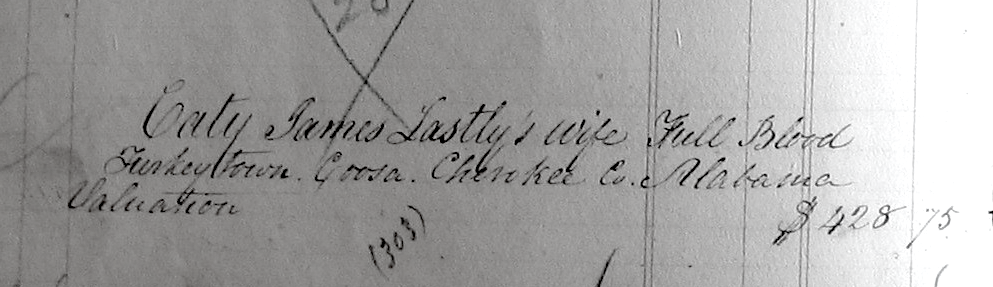
Caty James Lastly’s wife Full Blood Turkeytown Coosa Cherokee Co Alabama Valuation $428.75
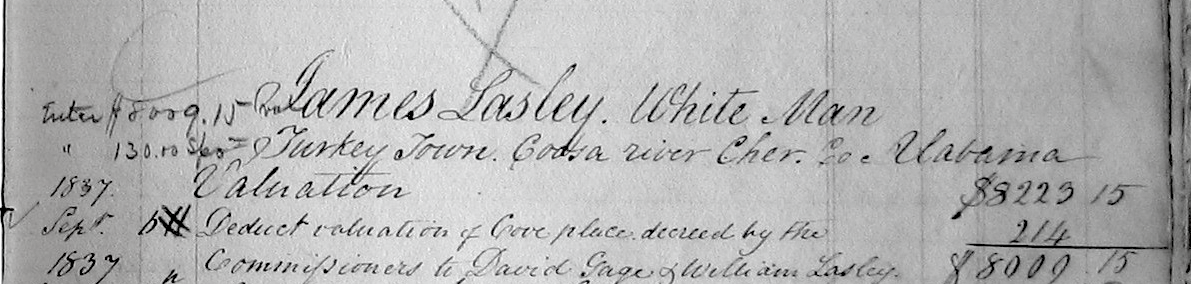
Enter $8009.15 James Lasley. White Man Turkey Town Coosa river Cher. Co Alabama Valuation $8225.15 Deduct valuation of Gov place decreed by the Commissioners to David Gage William Lasley 214 $8009.15. Sept 18371
The above clips from the pages in the register book in the National Archive show information on James Lasley. Caty is the second wife of James Lasley in Turkey’s Town. This valuation of James Lasley’s is $8000, which is 270K in 2025. In 1837, they lived on the Coosa River in Cherokee County, Alabama. Cherokee County was established in January 1836. We will explore who his first wife was and where he came from to Turkey’s Town. We will examine his significant role in the history of Turkey’s Town. We will explore what community came from his plantation.
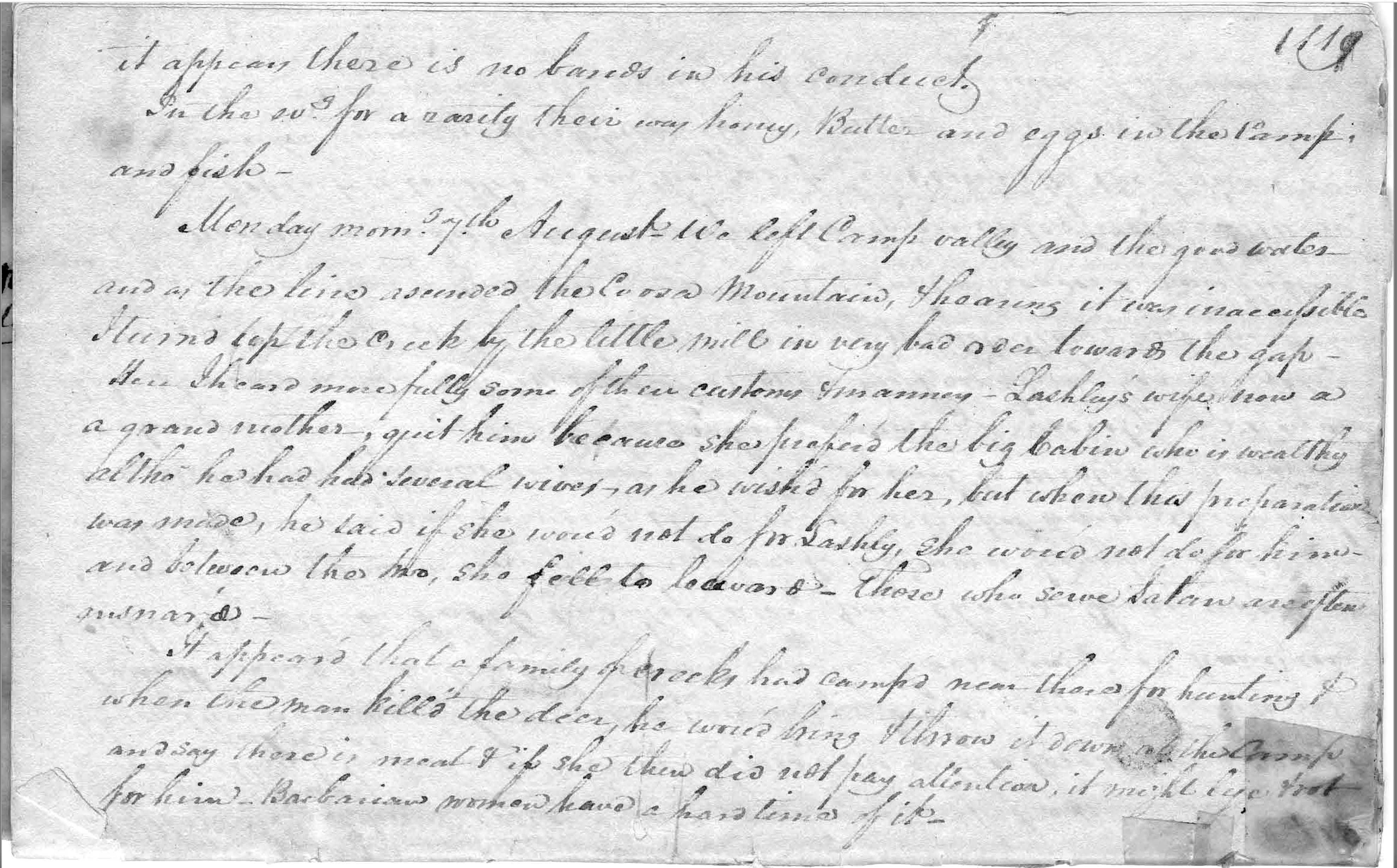
James Lasley moved from Turnip Mountain Town to Turkey’s Town in 1823.2 His first wife was Elizabeth Wickett.3 She is the sister of Major Ridge’s wife Susanna Wickett. Also sister to Wutty, the wife of John Fields.4 Elizabeth left James Lasley and pursued Big Cabin. Big Cabin rejected her.5 It was stated by Big Cabin, “If she would not do for Lasley, she would not do for him.” The below notation is made by Richard Blount, August 1826. “I learn more fully some of their customs & manners.”
James Lasley move to Turkey’s Town and took a new wife Caty. William, James and Elizabeth’s son stated in the claim for the Turnip Mountain Town improvements. He did this on behalf of himself and his siblings. They claimed that their father abandoned them. From the claim by William Lasley , Record Group 75, Entry 250, Case 88, NARA, Washington, DC. The last page of the claim did not survive. The exact date is unknown. It has to be after 1836. They quote the 1835-36 treaty.
“James Lasley the husband was a Whiteman, a citizen of the United States, resided with his wife & children on their improvement, until about the year 1822 or 1823, when he abruptly deserted his wife Elizabeth Lasley & infant children . . . went to Turkey town, took up with another Indian woman, drove off her husband continued to live with that other woman, with a view to get the reservation at or near Turkey town.”
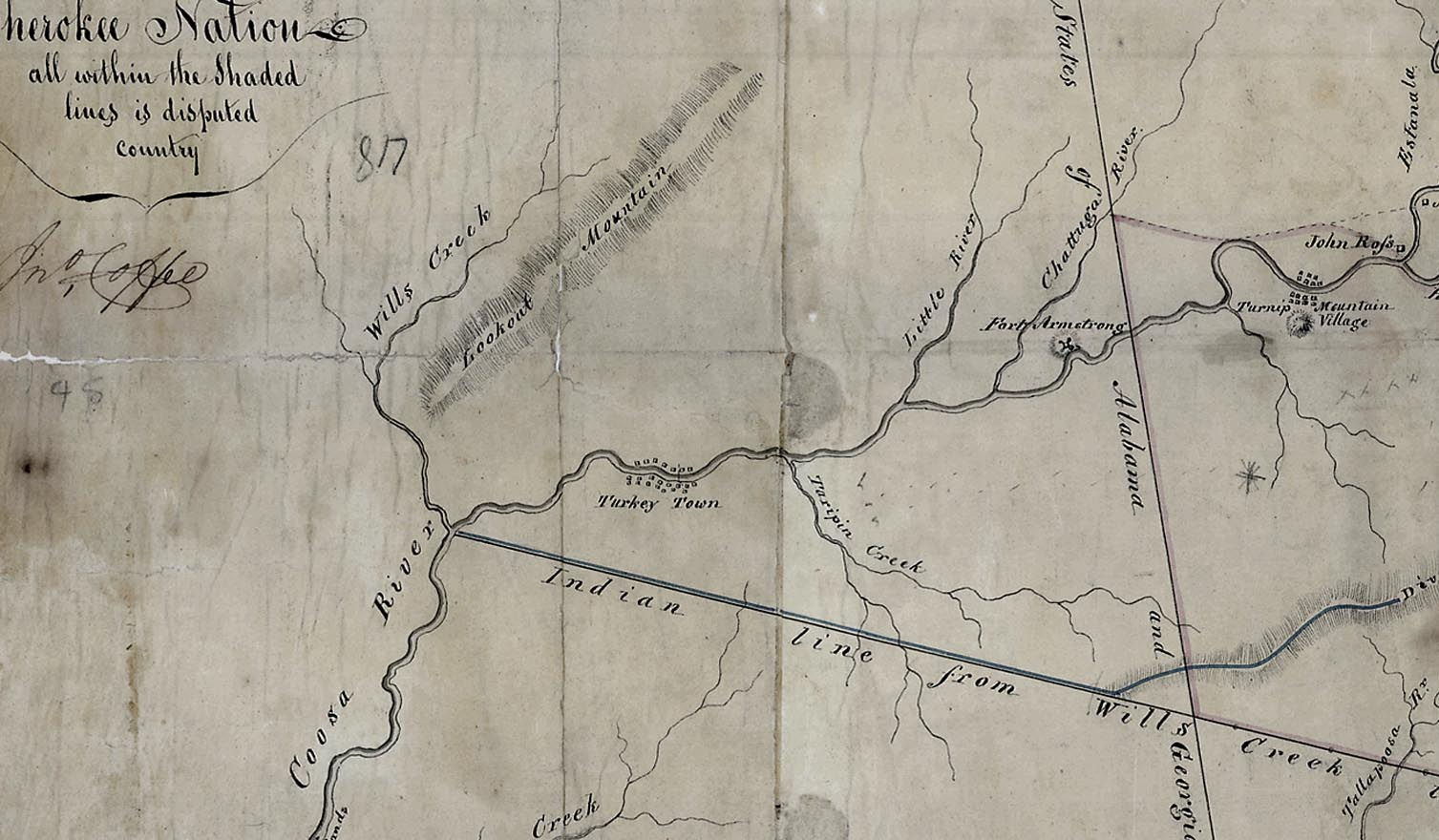
One can take which side they wish to be on. That of the Children or James Lasley. Richard Blount describes a different separation, as shown in the clip above, in his journal. Or you can believe what the children say. James and Elizabeth did separate. The place that James Lasley moved from was Turnip Mountain. This is Coosa, Georgia present day. Turnip Mountain Town is on John Coffee’s map at the right side. He had over 640 acres and operated a toll ferry across the Coosa River.
James and Elizabeth (Wickett) Lasley had three children. Auley (Aulley), William, and Margaret. Elizabeth was married to John Fields before marrying Lasley.6 John and Elizabeth had several children. James Lasley and Elizabeth daughter, Margaret (Peggy), marries Andrew Vann (Vann Valley, Caves Springs, Ga), then Gideon E. Coats (a white man). Gideon Coats and family are the namesake of Coats’ Bend, which will have its own post.
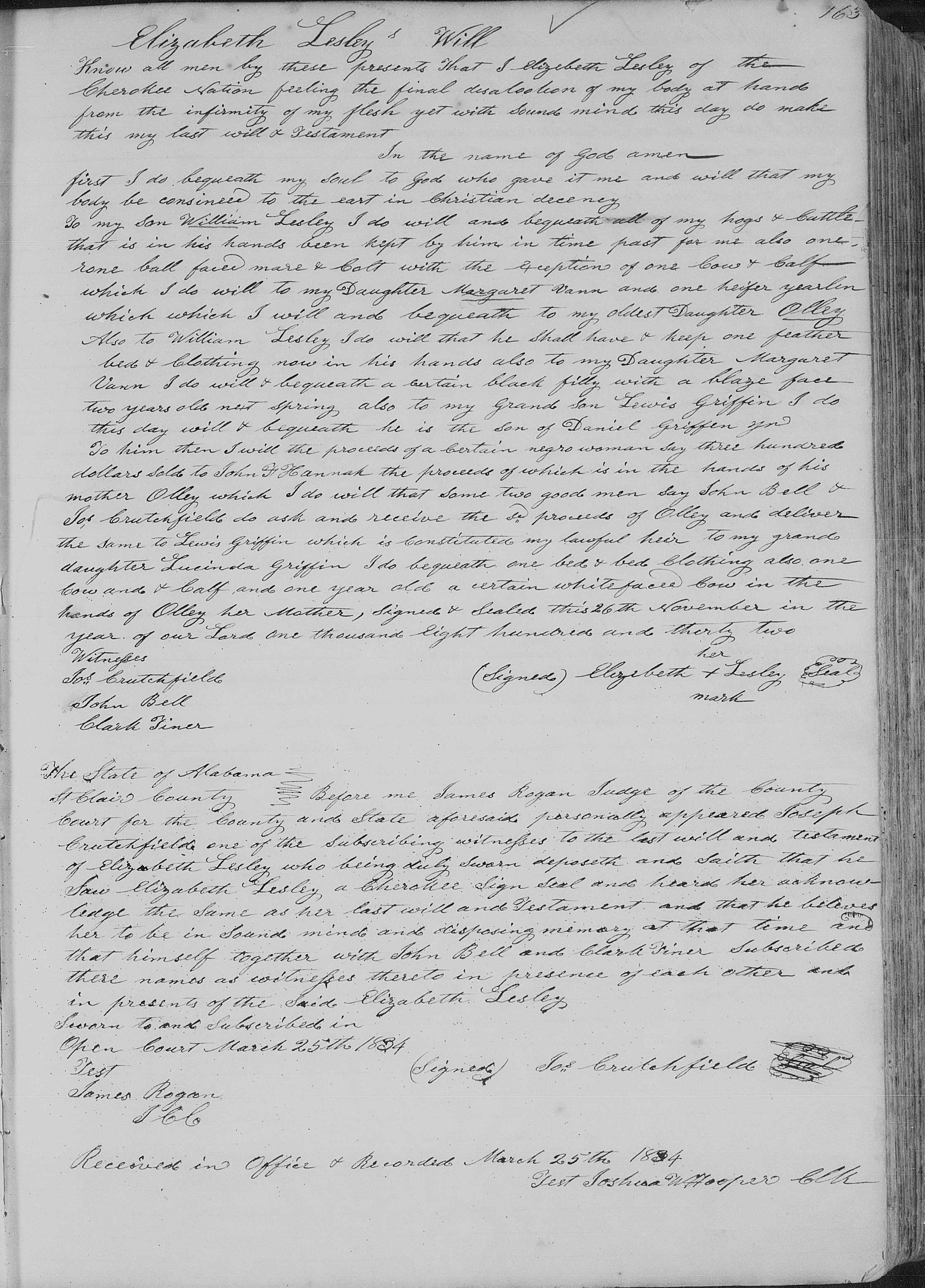
James Lasley moved to Turkey’s Town during the year of 1823. He took up with Caty. As stated by William Lasley, Caty had a husband, but he is unknown. It is not known if James Lasley sold his improvements at the Turnip Mountain Town. He did have money and started building a large complex in Turkey’s Town. His son, William, will move next door, about a mile away from him. Margaret and her children with Andrew Van will move on James Lasley’s property. As stated, she will marry Gideon Coats. Auley marries Daniel Griffin they live near her mother. Elizabeth Lasley, the former wife, moves to Wills Valley near Wills Town. She dies either at the end of 1833 or early 1834. She filed a will in Saint Clair County in 1832. This will was probated in March 1834. Hope you are connecting the “dots”.
NARA Record Group 75 E247, B227-228, copy from the Michael Wren collection ↩︎
William Chamberlain visited James Lasley at Turnip Mountain June 5, 1822. From Chamberlain’s journal; REV WILLIAM CHAMBERLIN PRIVATE JOURNAL MAY 23 – NOVEMBER 4, 1822 ABCFM 18.3.1 V3 – Items 25-30[KUTSCHE 2260-2262]MF Reel 738 [images 116-120] In the afternoon rode to Lasleys at Turnip Mountain 12 miles. Here we found that br. Mills, had gone to Brainerd, & most of the people had either gone to the ball play, or to Eucalooga, to spend the Sabbath. ……. We thought it best to accept Mr. Lastleys invitation to stay here till after the Sabbath. ↩︎
We start a new chapter. This will be about notable people in or of Turkey’s Town. These people will introduce us to tragedy, communities, and cities. Uncovering the history of Turkey’s Town.
The first notable person is Charles. He is the nephew of Chief Pathkiller. The notable part of this is whether justice was served or not. Is the complaint below by Chief Pathkiller about Charles? The clip is from the journal of Rev. Daniel Butrick. He visited Turkey’s Town in January 1822. Charles is Chief Pathkiller’s nephew. Chief Pathkiller’s complaint is about his son. The time frame is perfect. Charles was murdered in April of 1821. In the culture of the Cherokee people, for the male, your sister’s children become yours on her death.
Charles’ story is told by correspondents, including an attorney and a Justice of the Peace in Monroe County, Mississippi. It is told by Chief Pathkiller in his correspondence to the US Indian agents to be forwarded to the U.S. President. A trial was scheduled for January 1822. There are no surviving documents to indicate that it ever took place. In November 1822 Chief Pathkiller complained again about no justice. Again, no follow-up documents. I will try to explain the people as we uncover the information.
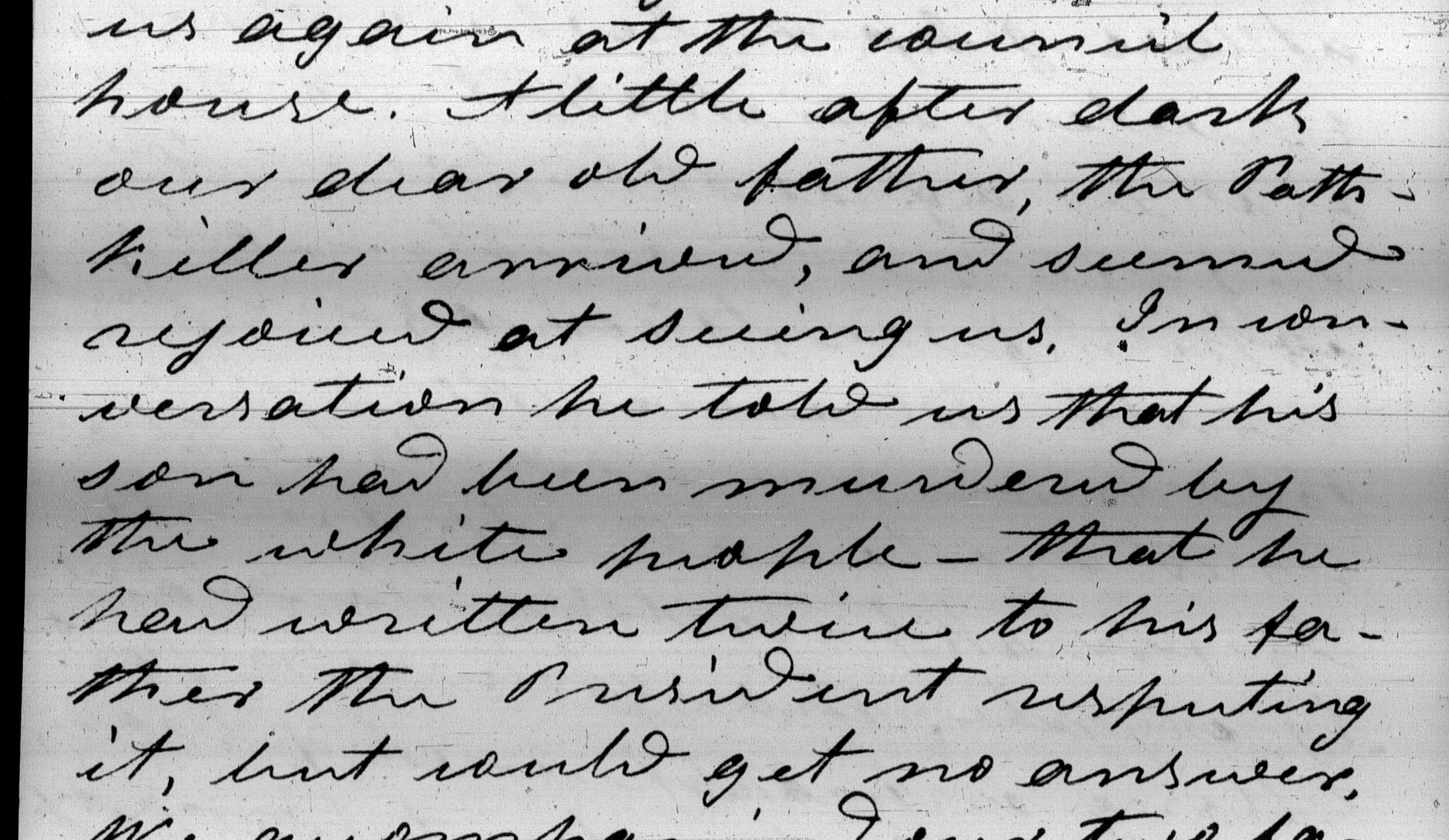
A little after dark our dear old father, the Path-killer arrived, and seemed rejoiced at seeing us. In conversation he told us that his son had been murdered by the white people – that he had written twice to his father the President repeating it, but could get no answer.1
The information below is from the records in the website, FamilySearch. Images noted in the reel. The spelling and punctuation are as recorded.
Turkey Town in council June 24, 1821 To Charles Hicks friend and brother
I will inform you-I see white people every day of all sorts and I treat them with Justice-Since the war we was friendly and I expected we would have mutual friendship, but now they have killed one my people-my nephew charles you must inform our agent, our agent was just where he is to do justice ask him for the murder when our beloved men put him in that place we were To do justic between each other he ought not refused to get the murder because we are less than they are-when any axident happens of that kind they mainly appehanded us whether it is just or not-my nephew was passing in the white country peacible when he was killed-Mr hicks friend I want you To procide in this as you know what to do in this case-if there should be any mistake in this I want you To regulate this and send it on To the agent. this murder was done on the Bigla near the Choctaw Nation we was informed by a man named Meconnal he was there when charldes was killed the man that killed charles by the name of Morris-when you get answer from Col. Meigs I want you to send it on as soon posble my mind is very much disturb when I hear from you mind will be easy-
Turkey Town
Hick Pathkiller the Boot Rattling goard Ta-Ka-ha-keh the frog . ar-me-yal-hak the cow Boy
Note above. Charles Hicks is Chief Charles R. Hicks. He was Chief Pathkiller’s second. The Boot we have discussed. Ta-Ka-ha-keh is Chief Pathkiller’s son. Colonel Meigs is the Cherokee Indian Agent, Return Jonathan Meigs.
Image 119
To James Meigs Esqr Agent of the Cherokee Nation High wasse Garrison
Zekiel Nash and John Halbert Esqrs Letter June 27th 1821 Subject Datailed circumstance of the murder of – Charles A Cherokee who was killed by Gabriel Morris a White man in Monroe County State of Mississippi on the 10th day of April 1821 said Morris is held to bail for his trail in Jany 1822
State of Mississippi Monroe County June the 27th 1821
To the Agent of the Cherokee Indians
Sir. This is to give you notice of the cherokee of the name Charles of Turkeytown. Together with a detail of the accompanying circumstance of unfortunate fail, which accured in this county, on, or about 18 April 1821-on the 23d June 1821, Gabriel Morris the young man that committed this unfortunate fact, came forward before me one of the Justices of Quorum for said County and surrendered himself a prisoner for the killing of said indian Charles, I then called on John Halert a Justice of the Peace for said County, to aid me in the examination of witnesses. We proceeded, confirmed & took down the testimonies of Solomon McCalahan and Robert McElvna both swore, That on the 10th of April 1821. At a store of Joseph Reed they saw the indian Charles on the horse of Gabrile Morris who told him to get off or he would work him off with a pine limb, but Morris did not do so, but only shoved him off and laid down the limb and took hold of the bridle. The indian also took hold of the bridle, Morris pulled it out of his hand. They both stood a while. The indian stuck Morris on the nose with his finger; then immediately drew his tomahawk and struck Morris on the side of the head a sever blow, Morris ran. The indian pursued him. Morris crossed a fence took hold a hand stick or spike, and struck at the indian across the fence the stick flew out of his hand. Morris again ran and called for help he believed the indian would kill him. Morris however got hold of an other stick and threw it at the indian missed him, but he (morris) fell, recovered(image 121)and crossed the fence back again and fell a second time recovered again got hold of the first hand stick and stood, the indian all the while pursuing wih his tomahawk drawn in a hostile manner and rushed on Morris. Morris struck him the indian two blows to the head, the indian fell, Morris struck him one more blow while down—John McCalahan swore to the same part, from the time Morris started to run except hearing him cry for assistance, saw the circumstance from a distance, Henry Hawkins sayeth on his oath the he saw G. Morris running with the indian after him and saw him turn and strike the indian two or three blows over the head he thinks the second brought him down. they all believe Gabrile Morris had received a very dangerous wound from the indian, which cut through his hat and several folds of a silk handkerchief, and fractured his scull bone-
Benjamin Pollard, sayeth on oath that the indian Charles came with him from black creek in the Cherokee nation and that he appeared to behave very well- Joseph Reed, sayeth, on oath, that he saw Charles the indian in a few hours after he recieved the fatal blow. That Dr. J. V. Tibit of Tuscaloosa first dressed his wound, and he Reed kept Charles the indian in his house, and afforded him every necessary assitance until he died, which was eight days afterwards. During which time the indian appeared to be entirely senseless-the (Rreed) had him buried in a decent manner near the place where he died—Thus Sir-After hearing all the evidence, we are of the opinion that the said Gabriel Morris had no other alternative but to kill or be killed, he regret etremly that he was reduced to that dire dilemma. But so it was the blow that he recieved from the indian with the Tomahawk had stuned him, the blood running down his face, and calling for help and no one rendered, we think he is only guilty of jusifiable homicide-But as the right is not in us to determine in the case, and for the satisfaction, friendship & peace of the relations of the said Charles, and the indian of the Cherokee nation, we have taken the said G. Morris in Recognizance to remain in a certain bounds till the first of January next. (1822) to await if necessary the further process of law, We have no circuit court or Jail in this county. You being the proper person to attend to this business, we send you this notice. And further pray you to give us the earliest information, what you think is further necessary to be done in this case the young man (Morris), wishes to be fairly discharged as early as practicable.
yours Respectfully Ezekiel Nash
June 27th 1821. John Halbert J. P.
N. B. About six weeks after Morris received the wound the indian, I saw a piece of the scull that was on that day taken out of his head, where he received the wound,
Ezekiel Nash
James Meigs is Return Jonathan Meigs, the Cherokee Indian Agent. His name was misspelled or misunderstood. Ezekiel Nash is an attorney. John Halbert is the newly appointed Justice of the Peace for the newly formed District V, Monroe County, Mississippi. Monroe County was created from Marion County, Alabama, when the new state line was drawn for Mississippi and Alabama in 1820-1821.3 This is on the Tombigbee River west of the Alabama state line. Benjamin Pollard is a white man living in Turkey’s Town. It is from his and his family’s name for Pollard’s Bend in Cherokee County, Alabama.
Image 124
(Letter 28 June 1821 of Charles Hicks on behalf of John Ross to Col. Return Meigs about several items, one item is as follows)
I have received an express from path Killer with letters to, which is herewith enclosed, on the subject of a white man killing his nephew, Charles, who went off with one Pollard from this nation in the beginning, I believe of 1821 or 1820 in order to go on to some of his relation in the Chickasaw Country, and the express stated, that the informant McConnals was present when Charles was killed by Morris, was at Pollards house, near the Chickasaw Country, and must insist on your best endeavour to have the murderer punished if possible for when any of our people act wrong the nation is threatened to be delt by our neighbours-
Image 135
Return Meigs to Pathkiller & Charles Hicks about the Murder of Charles
Friend & Brother Cherokee Agency 6th July 1821 .
I have received you letter of the 24th June Ultimo, informing of the murder of your Nephew Charles I know of no way for me to act in this case but to Advertise, at the place. where the murder was done and keep a vigilant, look out for the murderer, & if possible trace it to all source I will do all I can to detect the murderer, & I enclose an advertisement of which you can have several coppies made & set up at such place as will probably be best of which place you know better than I do, being unacquainted & with that part of the Country. You must invest yourself, no body can do so well as you in this unhappy case. Besides the Advetisment enclose the form of a complaint to any, or all the Magistrates of Alabama State, for you to make use of, as circumstances shall require-
Respectfully Return J. Meigs
Path Killer Head Chief Head Chiefs C. Nation
Charles Hicks
Image 137 (The copy of the Advertisement of the murder)
Advertisement
Cherokee Agency 6th July 1821.
Whereas a Cherokee named Charles Nephew of the Path Killer was in the month of -June last murdered by a white man in the State of Alabama, and Whereas in case it is very difficult is to detect the murderer the good citizens of that all who of equal justice, influenced by honorable motives it is hoped thay will and the Cherokees in detection the perpetrator of that murder. The Cherokees as Americans have a right to the protection of our laws & it is not doubted they will receive it in the State of Alabama by having the aid of us-Citizens W Return Meigs
Image 164
Chief Pathkiller’s response to Agent Meigs through John Ross.
Cheroker Nation
Friend and & Brother Nov 13th 1821.
I have seen and heard the content of the papers you have enclosed to Mr. Hick & myself relating to the circumstances and proceedings of the unhappy event, in which my nephew Charles fell a victim to the hands of Gabriel Morris a Whiteman in the County of Monroe & State of Mississippi this unfortunate affair forces to my mind the several similar events which have heretofore befallen Cherokee. The reflection is painful more particularly so, because equal justice have seldom ever been extended towards them in such cases, as they have been whitemen.-You are ready to say that I am suspicious or prejudicial -is not so. You have recomended to me to pursue & to use all exertion to apprehend the late murderer. This I would unhesitatingly do, provide he was within the bound of this nation-But what chance of prospect would there be for Indians to pursue and to apprehend a white(image 165)man in the white settlements? I answer none but indian persuers more to be taken up or kill themselves by the white Magistrates in their letter giving you notice of the unfortunate affair, justly observed, that the right is not in us to determine in this case & for the satisfaction friendship and peace of the relations of Charles & the Indians of the Cherokee Nation. We have taken the said G. Morris reconnaissance to remain in a certain bounds till the first of January 1822 to wait if necessary the futher process of law, you being the proper person to attend to this business C & C now call on the U. States agent for this nation and make known to you that is my request in behalf myself & the relatives of the said Charles & for the satisfaction of the Cherokee Nation, that you proceed without delayed to have the said Morris prosecuted and broght before a proper Court trial-should your health and situation be such as to prevent you attending personally to the prosecution of the said Morris send you assistant and interpreter in your place from and direct them to call on me on their way down. I will send some Cherokees with them to attend the trial, in case I do not go myself-I hope you will not delay in the business and you will not fail to send the subagent & interpreter to prosecute the Murderer-
I am your friend & Brother
Done in the presence of John Ross
Path Killer mark
Principal Chief Cherokee Nation
John Ross at this time period is the President of the Cherokee National Council.4 He will become the Principal Chief in 1828.
Image 443
John Ross his letter of the 25th November 1822.
Complaining of not further enquiry into the Death of Charles Cherokee, having been killed in Alabama by a white man named Gabriel Morris in a quarrel about the 20th April 1821. In that quarrel said Morris had his skull fractured a part of the scull bone taken out six weeks after the quarrel. It appears by abundant testimony that sd Charles was the aggressor.
Image 444
To Col R J Meigs Cherokee agent
Rossville Cherokee Nation Nov. 25th 1822 R –
Brother it is now twelve months since I wrote to you from this place, the subject was a painful one to me, and it is no less so now to be compelled to send it at this late period- you will recollect that an unfortuate circumstance had taken place in the State of Alabama, which deprive me of an only Nephew from the papers you transmitted to me it appeared that the good people of the State apprehended bound over to Court for procution whose hands my nephew became a victim, and that in my communication to as above alluded to. I had very earnestly solicited you to repair yourself, or to send your deputy to prosecute the Murderer & that myself & other Cherokees would accompany you o the deputy and attend his trail-since that time I have never heard a word from you on the subject. It is true the death of the Murderer would not restore to life my past departed Nephew(image 445)but have it was as little as you could have done to prosecuted the murderer in a Court of justice agreebly to the stipulations of our treaties-It is truly grievous to me to see so much indifference or relaxation on the part of the agent of the U. States indering ample justic to the propersion of blood Cherokees for which have been spilled by the hand of the White People on the of the Cherokee, on all occasion have they coplied with their obligation-the whites have so frequently spilled the blood of the red man with impunity & indefience of justice that some of them do boast, that they can kill an indian without hazarding their own lives for haveing done so,-Brother this is a hand and gauling bravado which the poor Redman is compelled to brook. It does truly appear to me that the obligations on the part of the U. States, have been considered by the Agents of Government whose duty it is enforce them, as a mere matter of form to appear the minds of the ignorant red people, so as to compel them on to their part to yield to the utmost rigor of you laws, Brother I cannot dissemble with – your attention in this unhappy affair is truely mortiying to my feelings & I cannot avoid expressing my dissatisfaction-I cannot believe that the Government of the States are disposed to administer two sorts of justice, one for the benefit of their own citizens & the other for the distruction of the red people, consequently there must neglect & inattention from some other quarter.-I have always treated my white Brethren with the utmost friendship, from the highest character to the lowest vagabond when they call on my house & chance to be drunk & use unbecoming words I make no difference in the friendly treatment, believing that they could not behave to, had they been sober. Brother had the fate of my Nephew befallen a dog, less indifference could not have been manifested than in the death of my nephew. I have the right to expect justice thro the medium(image 446)of your exections as an agent for this nation therefore I must request you to inform me whether you have or intend prosecutionf the murderer before a court of justice so that a fair tral may determine his fate-If nothing cannot or will not be done in this unhappy affair I trust that you will be candid enough to let me know without delay had you proceeded in the affair as I had a right to expect form you my mind would have been released from the unpleasant feelings which it still bears on the subject. Brother you cannot think my earnest request in this affair, unreasonable, if you take the subject on you own side-I whish to hear from you as soon as practicable, I hold you fast by the hand as a Brother & will not let you go until I am snatched away by the strong arms of death.
done in my presence, John Ross
Path Killer or Nanohetahee his mark
Conclusion
There was no response from President James Madison about this matter. Did he know? Was it passed up the chain of command? There is no response from the Government of Mississippi. Governor George Poindexter’s term ended in December 1821. Governor Walter Leak’s term started in January 1822. Agent Meigs died in the year of 1823. There does not seem to be any follow-up on the requests of Chief Pathkiller.
So the question again would be, what makes this notable to place it here in the history of Turkey’s Town? Did the outcome influence the decisions of John Ross in the coming years? Was Chief Pathkiller’s confidence and trust in the United States’ agents affected by the lack of response? Review the last two letters to Agent Meigs. I believe this is John Ross’s concern as well as Chief Pathkiller’s concern over the relations between the two nations.
22 Jan 1822, Journal of Reverend Daniel S. Butrick, pages 41-46, American Board of Commissioners for Foreign Mission (ABCFM), 18.3.1 V4, Michael Wren’s personal copy. Original and transposed copy. ↩︎
Eaton, Rachel Caroline. John Ross and the Cherokee Indians. Menasha, Wis., George Banta Publishing Company, 1914, page 35, image 55, https://www.loc.gov/item/14018822/↩︎

 New Seneca Turkey's Town