• Home
  • About
  • Alabama Chapter Trail of Tears Association
  • National Trail of Tears Association
  • Local History

New Seneca Turkey's Town

~ Uncovering the History of Turkeystown, a Cherokee Village/Town in Northeast Alabama

New Seneca Turkey's Town

Category Archives: Local History

study of the local history of Turkey’s Town, Etowah County, Alabama

Ballplay

31 Sunday May 2026

Posted by Jeffrey Sauls in Local History

≈ Leave a comment

Tags

Ballplay, cherokee-indians, northeast-alabama-history, trail-of-tears, turkeytown

1

Ballplay

The game is played with a ball, a stick with netting, and a basket to throw the ball into. This sporting event was played by the Indians. The Cherokee played this game. Tradition states that they had two goals, one at each end of the field. They called it “Little Brother of War”. 2 This is a sport still played today.

Where in Turkey’s Town did they play this sport? That site is lost to history. There are lots of traditions and stories about the location. None of them can be proven. In 1899, Si (James M.) Daniel, a historian for the area, stated in a Gadsden Daily Times News’ article, this;

Turkeytown is four miles long, has two main streets, railroad running right between them. One creek and street running across about the center of the town. Old man Turkey lived at the Sims farm, on the east street on Turkey creek. The Indian ball ground was at the north end of town, where the two streets and railroad come together. 3

Tradition does not agree with this site. The area described above by Mr. Daniels is on the western side of the Coosa River. However, it is plausible that this is the site where the Cherokees of Turkey’s Town played the game. It was a field of play and not a location. Today, it is a location.

Today’s Ballplay is on the Eastern side of the Coosa River. It is a community. There is Ballplay Bend and Ballplay.

Ballplay Creek

We can date Ballplay Creek on the east side of the Coosa River back to 1829. Information from “Report of assessors for valuing the improvements abandoned “. This list has heads of households. “Dates are from the 6th June to 2d of November, 1829, inclusive.” Widow Baldridge, Tesaufskee Baldrige, and Stinger McDaniel are listed as living in Alabama on Ballplay Creek.

Meeting in Cedar Bluff, February 1836.

State of ALABAMA, Cherokee county, mouth of Chattuga: 

The undersigned, a committee of the citizens of the State of Alabama, Cherokee County, who met in convention on the 6th February, at the mouth of the Chattuga, have had the matter upon the intrusion of the Cherokee Indians into our territory under consideration, and have sought for all the means of information to them practicable, and find that there are quite a large population of Creek Indians intruded into our country, and would suppose that a schedule of the relative locations, and the number so well ascertained, will give one of the best views of the case that can be presented to your excellency, viz: 

Spring creek …………………. 200 or upwards. 

Terrapin creek………..… 60 Polecat town. 

Terrapin creek ……..….60 Little Hogstown. 

Coosa river .…….. 500 Hillibulga and villages. 

Wolf creek …… 200 on Lookout mountain. 

Chattuga ……… 40 

Ball Play creek …….1,500 

Emigrants, two weeks successive ….. 50 bound NE  

Making, in all …………………. 2,610 4

The above list shows Creek Indians who avoided removal west and intruded into the Cherokee’s land, now Cherokee County, Alabama. Cherokee County, Alabama, became a county in January 1836. Interestingly, the largest group of Creek Indians is collected on Ballplay Creek.

Ball Play Becomes a Location

As the Cherokee people are removed from their lands, whites move in. Ballplay becomes a location rather than a game. A “Camp Meeting” in Ballplay is advertised in the Jacksonville newspaper.

5

Newspapers post mail routes in Alabama. From Huntsville papers.

6
7

Ancestry.com has listings of the Postmasters. Ballplay, Cherokee County, Alabama, first shows on the list with a date of 3 April 1840. The Postmaster is John Robinson. John G. Garrett was the Postmaster from 1853 through 1860. The first Postmaster of Ballplay, now in Etowah County, was Marcus H. Wagnon, June 1873. The first map of Etowah County shows the location of the Post Office at Mr. Wagnon.

8

McDuffie’s ferry is Wagnon Ferry. McDuffie was the first person to operate the ferry. The Wagnon family would take over it. The left side of the Coosa River is Coats’ Bend. GEC is Gideon Edward Coats.

Conclusion

Ball Pay is a sporting game. Today, it is a location. Ballplay Creek dates back to before 1929. This is before the removal of the Indians. The first Post Office dates to April 1840. “Little Brother of War” Ball Play.

  1. The Montgomery Advertiser (Montgomery, Alabama) · 2 Mar 1924, Sun · Page 38, Newspaper.com
      ↩︎
  2. The Game Known as The Little Brother of War, https://visitcherokeenc.com/culture/stickball/ ↩︎
  3. Gadsden Daily Times News, 10 October 1899, Newspaper.com ↩︎
  4. American State Papers, Documents, Legislation, and Executive, and of Congress Vol. 6
    Google Books, image 690-692, pages 693-695, Military Affairs, Indian Hostilities in Florida 
    https://play.google.com/books/reader?id=C5MzAQAAMAAJ&pg=GBS.PA694&hl=en ↩︎
  5. 16 September 1846, Jacksonville Republican, newspaper.com ↩︎
  6. The Democrat, 12 September 1840, newspaper.com ↩︎
  7. The Independant Monitor, 16 November 1842, newspaper.com ↩︎
  8. Tallman’s Map of Etowah County, Alabama, Cincinatti: Krebs Lithographing Co., 1877, https://alabamamaps.ua.edu/historicalmaps/counties/etowah/etowah.html ↩︎

Trust in the Lord with all your heart, and do not rely on your own understanding; in all your ways know him, and he will make your paths straight. Proverbs 3: 5-6 CSV

Trail of Tears

27 Monday Apr 2026

Posted by Jeffrey Sauls in Local History

≈ Leave a comment

Tags

alabama-history, cherokee-indians, Etowah County Alabama History, northeast-alabama-history, trail-of-tears, turkeytown
Sorry for not posting until now. It has been a time-consuming month.

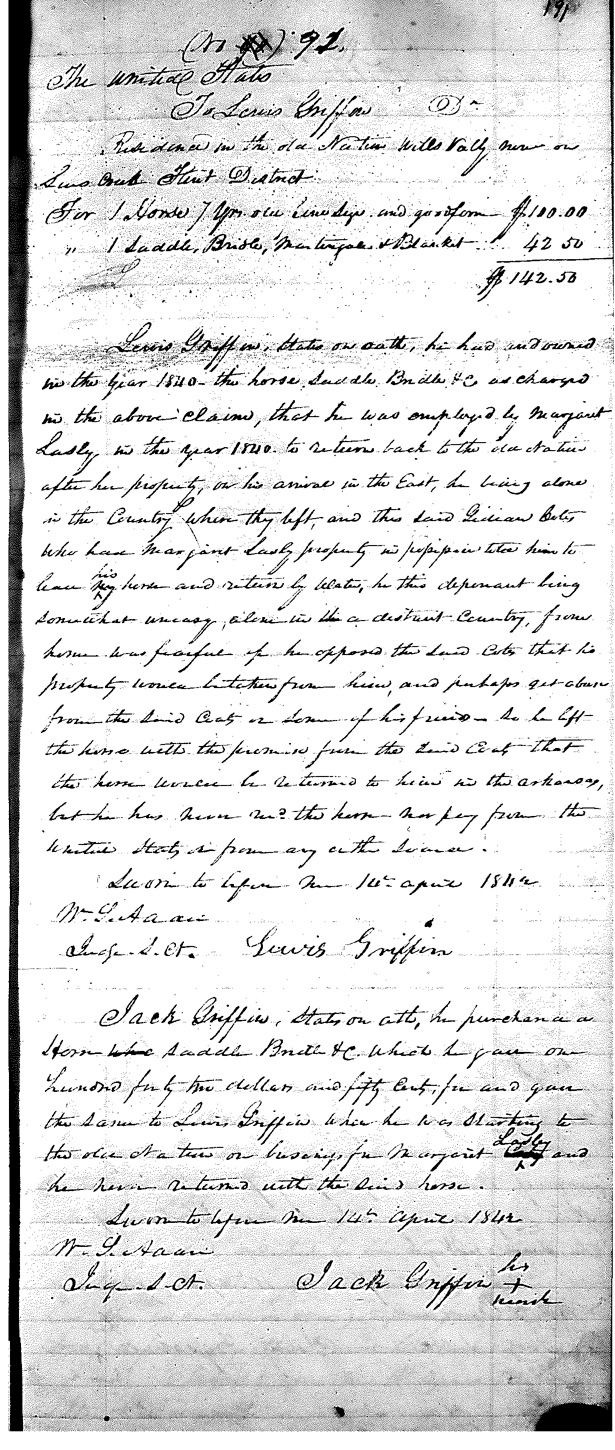
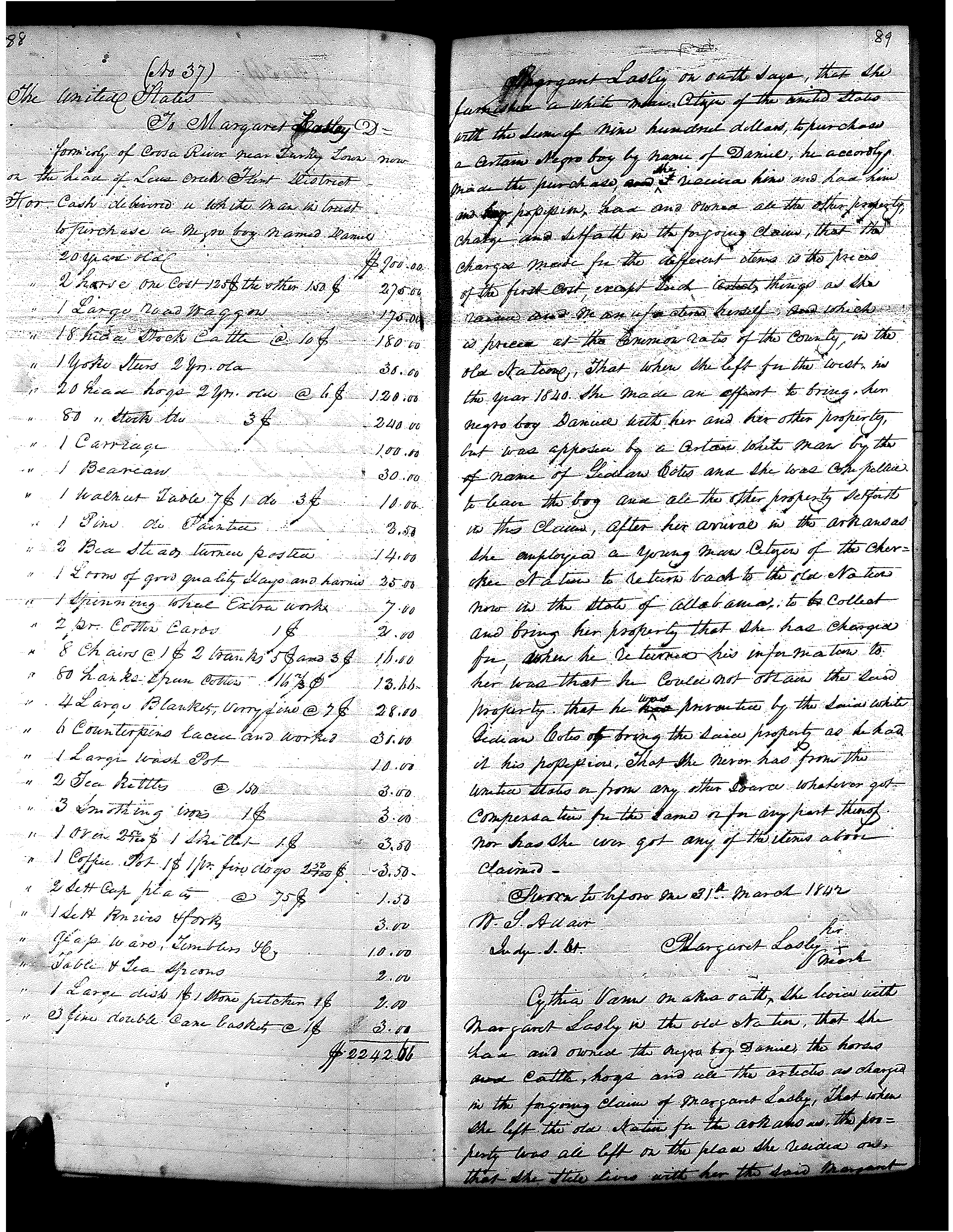
Conmincing of stock household and kitchen furniture, farming utensils, he claimant was compelled to abandon when captured with many Cherokee on the 1st June 1838 by the United States troops under the command of Genl Scott and marched to Fort Payne a distance of about 35 miles, the claimant owing to the strict regulations of the millitary was not allowed or permitted to return to his residence to get or dispose of the articles charged set forth in the forgoing claim.

This is from James Lasley of Turkey Town. It is his claim in 1842. The claim is what he was forced to leave behind. You can go back to the “Notable People in Turkey’s Town” post on James Lasley and see more information. What needs to be pointed out is the date: June 1st, 1838, and they were forced marched to Fort Payne.

The best understanding of the “Trail of Tears” in Northeast Alabama is written in a Report for the National Trail of Tears Association. This report is about the camps, forts, and Trail of Tears. Alabama Collection Camps, Forts, Emigrating Depots and Travel Routes Used During the Cherokee Removal of 1838-1839. It was published in 2007. It is an excellent source. Extremely well documented with sources. This group did their homework.  Lamar Marshall, Larry Smith, Michael Wren, Gail King, Project Director.  This is the link to the site, you can download this to study through. https://nationaltota.com/alabama-forts-and-camps/

The round-up took place in June 1838. They were moved from a stockade to the final stockade before the detachments left from the “launching points”. There were stockades in Northeast Alabama. In today’s Cherokee County, there were three “Forts”. Fort Likens was in north Cherokee County, at what is called Barry Springs. (See the above report.) Fort Lovell was three miles east of today’s Cedar Bluff, which is today’s Lawrence Cemetery off of US Hwy 9. This location was documented by Mike Wren in 2022.1 Fort Turkey Town was on Tarapin Creek about 5 miles east of the Coosa River; the location has not been proven.

Detachments

There are at least 17 detachments. The ones the people of Turkey’s Town were mostly involved with are. The John Benge and Lt Edward Deas Detachments. Fort Payne is one of the launching points. This is today’s Fort Payne, Alabama. It is believed that the stockade was at Rev. John Huss’ cabin. John Huss is also referred to as Spirit the Preacher. He is Cherokee, and at the time of removal, he was married to Nancy, one of the Boot’s (Chulio, the Creek Interpreter) daughters. (See Notable People of Turkey’s Town, Chulio (Boot), the Creek Interpreter post.) From Fort Payne, the detachment led by John Benge went West to Arkansas on foot and wagons.

A portion of; An Accurate Map of the State of Alabama and West Florida [Sheet 2: Cherokee, DeKalb, Jackson] LaTourrette, John 1837. Notice the “Spirit the Preacher” (John Huss), and the spring next to him. This is the site of Fort Payne stockade. The “mission station” is Will’s Town Mission.2

The Benge Detachment 

The Benge and Lowrey Families 

From the above-mentioned report. John Benge was the conductor of Detachment #4 (detachment number in John Ross Papers) and George Lowery was the Assistant Conductor. It is not surprising that these two men were chosen to lead the Benge Detachment during the forced removal of the Cherokee Nation in the fall of 1838. The Benge family and the Lowery family had a long-term relationship dating back many years. Both families had their beginnings from white traders of Scottish descent, who came to trade in the Cherokee Nation during the middle to late 1700s and married Cherokee women.3 

The Benge Detachment is the only detachment that left from Fort Payne, Alabama. The letter as noted earlier in this chapter written from Wills Valley by John Benge and George Lowrey dated September 29, 1838 to John Ross clearly stated that the commanding officer at Fort Payne would stop disbursing rations if the detachment didn’t move by October 1st. Fifteen wagons had started that day (29th) and twenty more would probably start the next day. Lieut. Poole stated in a letter (also noted earlier in this chapter) that the detachment had left its “camp eight miles below Fort Payne (Lebanon) on October 4 and by October 7th was within fourteen miles of Gunter’s Landing. The Benge Detachment connection with Rattlesnake Springs in Tennessee and the William S. Coody’s eye-witness observations does not have credibility. 4

Those who can be identified on the Benge Detachment from Turkey’s Town

The list of heads of households. Ahdahwartuske & Quaty, Takey, Money Crier, Crying Snake (Son of Nancy, Grandson of Chief Pathkiller & Peggy), Turner (Son of Chilio (Boot), the Creek Interpreter), Augerhole, Nancy P. Killer (Daughter of Chief Pathkiller & Peggy), Houston (Son of Nancy, Grandson of Chief Pathkiller & Peggy), Nan, Nelly P. Killer (Daughter of Chief Pathkiller & Peggy), Jane P. Killer (Janey, Daughter of Chief Pathkille & Peggy), Corn Tassel, 5

The Lt. Edward Deas Detachment

Three detachments of Cherokee, totaling about 2,800 people, traveled by river to Indian Territory. The first of these groups led by Lieutenant Edward Deas left on June 6, 1838 by steamboat and barge from Ross Landing, present-day Chattanooga, Tennessee. They followed the Tennessee River, Ohio River, Mississippi River and the Arkansas River and arrived near Fort Coffee on June 19, 1838.

The second detachment, led by Lt. Robert H.K. Whiteley, left in mid-June and arrived two months later near Stilwell, Oklahoma.

The final detachment, led by John Drew, left in the late fall and arrived in Indian Territory the following March.

John Bell led one detachment from Cherokee Agency at Charleston, Tennessee, westward across the southern part of Tennessee to Memphis and then to Indian Territory.

His party consisted of about 650-700 Cherokee who supported the removal treaty and opposed John Ross. Bell’s detachment also differed from the Ross-allied parties in that it had a military escort. Lieutenant Edward Deas, who had earlier led a party by river, commanded the Bell’s detachment military escort. The Bell detachment took a more direct route than did the Ross-allied parties, and reached Indian Territory in January 1839.6

Those who can be identified on the Deas Detachment from Turkey’s Town

The list of heads of households. Silas Choat, Sanders Choat, Susan Radcliffe, Frances Hampton (Anna’s husband, Nelley’s daughter, Chief Pathkiller, and Peggy’s granddaughter), Liddy Fields, Jon-Man, Buffalo, William Lasley, George Campbell (Quata’s husband, Chief Pathkiller, and Peggy’s daughter), Owl, Se-lo-nee-kee, Beaver Tail (Husband to Qualeoo, Peggy’s niece’s, He is the son of Anoha Chief Pathkiller’s granddaughter, Anoha’s mother is unknown), Dirt Seller, Polly Smith, Siter, Olly Blackbeard, Liddy Blackbeard, Kity Rabbit, Richard Ratliff Sr., Richard Ratliff Jr., Matt Jones 7

Some people left for the West on their own.

Conclusion

This provides the names of people to help make the Trail of Tears more personal. These are people and their lives. This is not just a story.

  1. Finding Fort Lovel, Researching the Removal: A Case Study, Goingsnake District Heritage Association January 2023 https://www.youtube.com/watch?v=NfVNOw7EREw ↩︎
  2. https://alabamamaps.ua.edu/historicalmaps/counties/dekalb/dekalb.html ↩︎
  3. Alabama Collection Camps, Forts, Emigrating Depots and Travel Routes Used During the Cherokee Removal of 1838-1839, Lamar Marshall, Larry Smith, Michael Wren, Gail King, Project Director, Page 384, Chapter 10, ↩︎
  4. Ibid, page 400 ↩︎
  5. Ibid, Page 418-424, Muster Roll of Detachment No. of Emigrating Cherokee under Charge of Capt. John Benge, ↩︎
  6. Discovering the Trail of Tears on the Natchez Trace, National Park Service https://www.nps.gov/thingstodo/discovering-the-trail-of-tears-on-the-natchez-trace.htm ↩︎
  7. Cherokee Registry Trail of Tears-Deas detachment, Cherokeeregistry.com, also https://accessgenealogy.com/native/1838-cherokee-muster-roll-1.htm 1838 Cherokee Muster Roll 1, Accessgenealogy.com, Muster roll of Lt. Deas. Cherokees who arrived West 1 May 1838 ↩︎

Chapter IV Trail of Tears

19 Thursday Mar 2026

Posted by Jeffrey Sauls in Local History

≈ Leave a comment

Tags

alabama-history, cherokee-indians, Etowah County Alabama History, northeast-alabama-history, trail-of-tears, turkeytown

Turkey’s Town and the Trail of Tears. A dark history of the US. How did this affect Turkey’s Town? How were the people involved?

Turkey’s Town’s involvement was first seen in the Treaty Ratification of October 1816.

Turkey Town Treaty

At midnight on 4 October 1816, Andrew Jackson and David Meriwether dictated a letter to be sent to William H. Crawford, Secretary of War with a summation of the treaty and other comments. In this letter at image 113, they talked about the removal West of the Mississippi. Several Chiefs inquired about the effects on the nation.

 It was internalize to us however several of the chiefs that a strong disposition prevailed among many individuals of the nation to emigrate to the west of the Mississippi and they wished to know whether in the event of national removal it was practicable to effect an exchange with the General Government. .1

The Removal Bill

Americans elected Andrew Jackson of Tennessee as president in 1829. The Removal Bill of 1830 initiated the voluntary Indian removal. It was also known as the Indian Removal Act. The Indian Removal Act was passed in May 1830. It provided for lands in the Arkansas territory as a place to move to. So-called “West of the Mississippi River”. 2

Chief John Ross, Principal Chief of the Cherokee Nation, protested. The State of Georgia passed a bill in January 1830, claiming all of Northwest Georgia and the Cherokee Territory. This included Georgia State laws over the land.3 To add to the takeover of land, gold was found in Northwest Georgia. White men intruded by the hundreds searching for gold. 4 Georgia then sectioned off the land, and a lottery was held for 160-acre lots.

New Echota Treaty 1835

The Treaty of New Echota was signed on December 29, 1835, in New Echota, Georgia. Officials of the United States government and representatives of a minority Cherokee political faction, the Treaty Party, were involved.

The treaty set terms for the Cherokee Nation to give up its territory in the southeast. They were to move west to the Indian Territory. The treaty was not approved by the Cherokee National Council. Principal Chief John Ross did not sign it. Still, it was amended and ratified in March 1836 by the US Congress by one vote. This amendment and ratification made it the legal basis for the forcible removal. 5

The twenty-member council, “Treaty Party” that signed (by mark or signature).

Major Ridge,   Te-gah-e-ske,  James Foster,   Robert Rogers,  Tesa-ta-esky,  

John Gunter,  Charles Moore,  John A. Bell, George Chambers,  Charles F. Foreman, Tah-yeske,  

William Rogers, Archilla Smith, George W. Adair, Andrew Ross,  Elias Boudinot, 

William Lassley,  James Starr, Cae-te-hee,  Jesse Half-breed, 

Stand Watie, John Ridge. were the ones who provided instructions. 6

John Ridge, with this group, held 3/8 interest of Chief Pathkiller’s estate. This included the ferry, house and orchards at what is today’s Centre, Alabama. Review Chief Pathkiller’s ferries in this blog. John Ridge was the National Council’s Clerk (Secretary). William Lassley is the son of James Lasley. He is mentioned in the posts on James Lasley.

1835 Census

To know who would be potentially removed from Turkey’s Town, we need to review the 1835 census. A census was ordered to be taken of all Cherokees left in Alabama, Georgia, and Tennessee. This refers to the Henderson Roll. Below are the heads of households from Turkey’s Town. Rezin Rawlings took the census in Alabama. Recorded October 26, 1835. 7

page 15

N. Pathkiller, SE NO WAY, Writer, Nann, TE SEE, Johnson, Seeds, AT TA WO NO LE SKE, CHU WA STE TA, AH TA LO NE, Dirt Seller, Buffalo,

page 16

John E WAY NAH, SOR KE NEE, SE QUA TAH, TEN A YA CHEE, TA KEE, CHU QUA LOO KEE, Richard Ratliff Jr., George, Richard Ratliff Sr., James Lassley, Gun Fill, Pumpkin Pile, TU NE WAH, TOO NEY, Young Wolf,

page 17

Money Cryer, WAT TEE, James Carroll, John Ratliff, George Campbell, TE LU NA SKEE, Corn Tassel, Beaver Tail, John Riley, A NEY, Nelly, Auger Hole (Coosa),

Next Time

Who is on the detachment rosters? The Cherokee in Turkey’s Town were rounded up and forced to the stockade at Fort Payne. During June and July of 1838, they were forced from their homes.

  1. Image 113, National Archives, Record Group 11, General Records of the United States Government, Series Indian Treaties; RIT #83; Ratified Indian Treaty #83, Cherokee, Chickasaw Council House September 14, 1816, There are 231 images of this with correspondence of letters and a journal. https://catalog.archives.gov/id/100220646 ↩︎
  2. Indian Removal Act: Primary Documents in American History. Library of Congress. https://guides.loc.gov/indian-removal-act ↩︎
  3. John Ross and the Cherokee Indians, Rachel Caroline Eaton, A. M. 1914, Chapter VII, The Removal Bill, Image 60,Google Books, https://play.google.com/books/reader?id=0eUNAAAAIAAJ&pg=GBS.PA60 ↩︎
  4. Ibid, Image 64 ↩︎
  5. The Treaty of New Echota, https://en.wikipedia.org/wiki/Treaty_of_New_Echota ↩︎
  6. Laws and Treaties, Volume II, Charles J. Kapplar, Treaty with the Cherokee 1835, https://americanindian.si.edu/nationtonation/pdf/Treaty-of-New-Echota-1835.pdf ↩︎
  7. Cherokee Indian census of 1835 of the states of Georgia, Alabama, and North Carolina. Copy of the transcribed Alabama Section of the Old Book. Personal Copy of Jeffrey Sauls, received as a gift in 1992. ↩︎

Trust in the Lord with all your heart, and do not rely on your own understanding; in all your ways know him, and he will make your paths straight. Proverbs 3: 5-6 CSV
David A Gage, Notable People

03 Tuesday Mar 2026

Posted by Jeffrey Sauls in Local History

≈ Leave a comment

Tags

alabama-history, cherokee-indians, Chief Pathkiller, Etowah County Alabama History, northeast-alabama-history, trail-of-tears, turkeytown

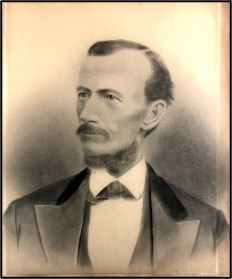
As we continue with David Gage in Turkey’s Town, we see that he is involved with Tarpley W. Nall. Tarpley W. Nall was trying to buy a part of Nelly’s farm. This farm is on the East side of the Coosa River. Modern-day Alford’s Bend. Review the previous documents. All of this property was Chief Pathkiller’s until he and his wife, Peggy, separated (divorced). Peggy has gifted the improvements to her daughter, Nelly. Nelly has gifted them to her daughter Anna. Dragging Canoe (deceased), Chief Pathkiller, and Peggy’s son’s family are claiming it along with David Gage. Confusing? Sky-a-too-ka, the son of Dragging Canoe, has enlisted David Gage on their part. Tarpley Nall decided not to buy after speaking with some Cherokee. He also said Sky-a-too-ka said he is not the owner. Tarpley W. Nall is a white man not married.

1

Quata, Peggy and Chief Pathkiller’s daughter sided with Anna on who owned the improvements.

2

Quata is married to George Campbell. George is a white man. They are listed in Peggy Pathkiller’s will. Anna is married to Frances Hampton.

3
4

Money Hunter is a nearby neighbor.

David Gage and William Lasley

David Gage is involved with William Lasley. William is the son of James and Elizabeth Lasley. Elizabeth is Elizabeth Wicket, a Cherokee woman. James and Elizabeth separated in 1822 when Elizabeth wanted Big Cabin as a husband. You can review this in the section on James Lasley. The following document is where William Lasley is try to buy an improvement next to his father. The location of this is about four miles north of modern-day Turkeytown Creek. It would be on Spring Avenue. This is near modern-day Croft Ferry. Croft Ferry is James Lasley’s Ferry.

5
6

David Gage, Pathkiller’s Original Ferry

David Gage assisted James Kay in acquiring Chief Pathkiller’s original ferry. When Chief Pathkiller and Peggy separated Chief Pathkiller moved north and “took” a new wife. He started the improvements that would become Pathkiller’s Ferry, modern-day Garrett’s Ferry, Centre, Alabama. Peggy was left with the original ferry and improvements. This was one-and-a-half miles south of Turkeytown Creek. This is modern-day Fitts Ferry. This separates Alford’s Bend on the east side from White’s Chapel/Gaston School area on the west side.

John Ratliff filed a Claim for this ferry on January 16, 1837 (he was one of four owners). He filed it before Josiah Harper, Acting Justice of the Peace for Cherokee County, Alabama. He stated that the Ferry was 1½ miles below Turkeytown and was then in the possession of James Kay. He said that a white man named Hays took the ferry from him. This happened shortly after the laws of Alabama were extended over the Cherokee lands in January 1832.7

8
9
10

The Original Patentee for the ferry’s location was James Kay. He homesteaded the west side of the ferry.11

Conclusion

David Gage, a notable person of Turkey’s Town. He and his family moved west during the Trail of Tears. They moved on their own. They are not listed on a detachment roll for the Trail of Tears. They settled in Texas.

He was elected the first Constable of Turkey Town, Alabama.

Also confirmed in these documents is that Turkey’s Town is in modern-day Etowah County. All of the documents state, “five miles below Lasley”. Alford’s Bend and Croft Ferry are in Etowah County, modern-day.

  1. NARA, Record Group 75, Entry 236, Miscellaneous Claims Papers, 1836-1839, Records of the Bureau of Indian Affairs, Image 449, National Archives Building, Washington, DC ↩︎
  2. Ditto, Image 580 ↩︎
  3. Ditto, Image 582 ↩︎
  4. Ditto, Image 590 ↩︎
  5. Ditto, Image 439 ↩︎
  6. Ditto, Image 443 ↩︎
  7. John Ratliff’s Spoliation Claim for a Ferry and Improvement. Folder of John Ratliff; Miscellaneous Claims Papers, 1836-1839, of the First Board of Cherokee Commissioners, Entry 236; Records of the Bureau of Indian Affairs, Record Group 75; National Archives Building, Washington DC.  ↩︎
  8. St. Clair (AL) County Court Minutes (1828-1834), March-August, 1833 page 172 ↩︎
  9. Ditto, page 226 ↩︎
  10. Ditto, page 227 ↩︎
  11. Bureau of Land Management, General Land Office Records, Eastern States Office, Springfield, VA. Pre-emption Certificate #6,885 for James Kay of Cherokee County Alabama issued June 1, 1845 for fraction “A” of fractional Section 20 in Township 11 of Range 7 East. Pre-emption Certificate #8,419 for James Kay of Cherokee County Alabama was issued April 10, 1847 for the northwest quarter of the southwest quarter of Section 20 in Township 11 of Range 7 East. Both in the District of Lands subject to Sale at Lebanon Alabama. http://www.glorecords.blm.gov/PatentSearch/ ↩︎

Trust in the Lord with all your heart, and do not rely on your own understanding; in all your ways know him, and he will make your paths straight. Proverbs 3: 5-6 CSV
David A Gage, Representative

21 Saturday Feb 2026

Posted by Jeffrey Sauls in Local History

≈ Leave a comment

Tags

alabama-history, cherokee-indians, Etowah County Alabama History, northeast-alabama-history, trail-of-tears, turkeytown

This is the last person I am posting in the “Notable People of Turkey’s Town, Chapter. David Gage is a white man married to a Cherokee Woman. She is Lucy (she is of the Fish family, not a surname). The Fish family lived in Will’s Valley. David and Lucy have a farm in Will’s Valley. He also has a farm in Turkey’s Town. He served many Cherokee people of the area as their representative (like a lawyer). I will show documents. I will also show who he was involved with. This will help you understand his role and his involvement with Turkey’s Town.

The following is from the GINI website. I know some of the people who helped with the research for this profile, so I trust it. It is an overview of David Gage.

GAGE, DAVID (1796–1854). David Gage, early settler and legislator, was born in Kentucky (or White County, TN according to enlistment records for War of 1812) in 1796. He moved to Texas from Alabama in 1839 and, on May 21, purchased a fourth of the Leonard Williams league; he settled in the Williams Settlement in southern Rusk County, near Mount Enterprise. A few months later he organized and was made captain of a company of minutemen for protection against the Indians. He served with the company during 1840 and 1841. Gage was elected representative to the Eighth and Ninth congresses of the republic, December 4, 1843, to June 28, 1845, and in 1845 was elected senator for the Fourth District and delegate to the Convention of 1845. After annexation he served three terms in the Texas legislature. He died at his home near Mount Enterprise in 1854.


A BRIEF HISTORY OF DAVID GAGE’ The homesite of David Gage is located in the southern part of Rusk County, in the John Rutland survey, approximately five miles north of Mt. Enterprise and approximately two miles southwest of the community of Minden. This location is just north of what is now the ASH Griffin farm. His homesite is described by the Handbook of Texas as being one-fourth of the Leonard Williams league in Southern Rusk County, near Mt. Enterprise, Texas.
He was granted a 3rd class certificate for 320 acres of land as an immigrant after October 1, 1837, and prior to January 1, 1842. The Certificate is dated December 31, 1839.
At the time of his death, he owned approximately 12,000 acres of land in the southern part of Rusk County.


He immigrated to Texas in May 1839, from Arkansas. The Handbook of Texas states (in error) he came to Texas from Alabama. He was a veteran of the War of 1812. He enlisted 10 July, 1814, and was discharged 9 July, 1819, at Ft. Scott, Ga. He was a corporal in Capt. Thomas Blackstone’s Company, Seventh Regiment of Infantry. From 1840-1841, David Gage served as Captain of a company of minute men in Rusk County. These minute men were organized for protection against the Indians.


He was elected Representative to the Eight and Ninth Congresses of the Republic of Texas December 4, 1843, to June 28, 1845. In 1845, he was also elected a delegate to the Annexation convention. He was a signer of The Joint Resolution for annexing the Republic of Texas to the United States. He was also a signer of the Constitution of the State of Texas adopted in convention at the City of Austin, August 27, 1845. After Annexation, he was elected to serve three terms in the State Legislature: the 2nd, 1847-48; the 3rd, 1848-1850; and the 5th, 1853-54. His name appears along with the other sixty signers of the Resolution and Constitution on the west wall of The Memorial Museum, Univ. of Texas Campus, Austin, Texas.


On February 5, 1847, a Post Office was established at Gage’s with David Gage appointed Post Master. It was discontinued on October 21, 1847. (See letter, Gen. Service Administration, dated May 14, 1962.)
David Gage married Elizabeth Austin in Madison County, Alabama, February 28, 1820. He had one known child, William Patterson Gage, born 1821. (1860 Census, Rusk County gave his age as 39.) Record is lacking of dissolution of this union by death or otherwise.


The next record we have of David Gage is in Cherokee Country in Northeastern Alabama, where he was elected Constable of Turkey Town, St. Clair County, on January 13, 1833. He was one of seven captains presiding over the St. Clair County Beats, his beat being Turkey Town. David Gage’s second wife was Lucy Fish, a full-blooded Cherokee Indian. Their marriage was about 1832 or 1833, as Rusk County 1850 Census shows the age of their oldest child, Mary Ann, as being 16. Their second child, Eliza Jane, age 12, (married James A. Bane, Laneville) was shown as being born in Arkansas. David Gage had five farms in DeKalb County, Alabama. I have a list of property for which the U.S. paid him when the Indians were removed from Alabama to Indian Territory, Oklahoma. He lived on Little Wills Creek, DeKalb County, Alabama. This inventory was dated September 29, 1836, and valued at $3,843.54.
David Gage died April 26, 1854 at his home near Minden, Texas. His place of burial is on the west side of Highway #259, on the first little hill across the stream, south of the farm of the late W.G. Hodges. The burial place is located on the farm known in the 1920’s as the Bill Shadden farm.

1

The above is mostly about David Gage after he moved from Turkey’s Town. How is he connected?

Turkey Town Constable

The first election held in Turkey Town was in 1833. This would become Cherokee County in 1836. It later became Etowah County, Alabama, in 1868. Saint Clair County, Alabama, claims the territory. David Gage was elected Constable. Notice that the “beat” in Turkey’s Town is “Capt. Gage’s beat.

2

“and also of one other return of an Election held at Turkey Town in Capt Gages Beat for Two Justices of the peace and a Constable on 19th day of January 1833 That James Street and James G Carroll was duly Elected Justices of the peace. Capt David Gage Constable ———–“

There was no Etowah or Cherokee County at the time. This is the first election in what would become Etowah County, Alabama. A constable in the 1800s was a local law enforcement officer. They were responsible for keeping the peace, serving legal documents, and enforcing minor laws. They represented the primary form of policing. The Treaty of 1830 with the Cherokee set in motion the removal to the West. The Treaty of Cusseta in 1832 moved Alabama to proclaim laws over all of what would become Alabama.3 So this brought the election to take place. Saint Clair County claimed the territory that is Turkey Town. Follow the timeline. 1830 Treaty, 1832 Treaty, 1835 Treaty, then Trail of Tears, 1838.

As a Constable, David Gage can represent people in legal proceedings.

David Gage and Chief Pathkiller’s Family

David Gage became involved with Chief Pathkiller’s family. Dragging Canoe, Chief Pathkiller, and wife Peggy’s son died in 1833. Dragging Canoe’s son, Sky-a-too-ka, entered into a dispute with Anna, daughter of Nelly (sister of Dragging Canoe). The disagreement was about who had the right to the improvements on the East side of the Coosa River. This site is the old residence of Chief Pathkiller. This is at today’s Fitts Ferry on the east side of the river, known as Alford’s Bend. This is in present-day Etowah County, north of Gadsden. This area became Peggy’s when Chief Pathkiller move north and took a new wife. He created the new improvements, which are the Garrett farm in Centre, Alabama. At the time of the dispute, Dragging Canoe, Chief Pathkiller, and Peggy were deceased. When Peggy died, she left it to Nelly. Nelly gifted it to Anna, who is married to Frances Hampton. Sky-a-too-ka is claiming this for himself, his mother, Watty, and his sister, Martha.

The following are documents showing Sky-a-too-ka’s claim. These involve several people. Several of them are white people who are intruders now moving into the area because of the Treaties. The first document is recorded in Benton (Calhoun) County. This county also would claim Indian territory. Read them closely. Click on them to make them larger. These also confirm Turkey’s Town’s location in today’s Etowah County, Alabama. They are all from the NARA microfilm. 4

Image 133, Notice that Benton County (Calhoun) is also claiming the area.
Image 135
Image 136
Image 138
Image 139
Image 140

If you read these closely, you see the claim of Peggy running Dragging Canoe’s family off this property. In Cherokee culture, the woman is in charge of the estate. She is and will be responsible for the girls in the family. Not the sons. You see this in Peggy’s will. She left everything to the girls and their families. She even left some of it to her sister’s daughter. Dragging Canoe was not included in her will. He is a male and is to take care of himself.

One of the persons involved is Tarply W. Nalls. He is a white man. He is involved with others other than the Pathikllers. He is doing his best to take advantage of what is going on and the move west. I will post his response to his trying to buy or acquire parts of this property.

Another person is William Garrett, Jr. He is the son of William Garrett. William Garrett is the brother of John H, Garrett. John H. Garrett will dispose (move off) John Ridge’s tenet. This is after Ridge acquired Chief Pathkiller’s ferry at today’s Centre, Alabama.

Next Time

I will leave this for you to ponder over. Review the documents again. This is the view of Dragging Canoe’s family. The maternal side of the family is the dominant side for the Cherokee people. I will post next time Tarply W. Nalls’s response for attempting to purchase part of the improvement. I will show Nelly’s side of this dispute. I will introduce David Gage’s involvement with William Lasley. He is the son of James Lasley and Elizabeth Wickett Lasley. Notice that he is the interpreter on the documents. His father is white and his mother is a full-blood Cherokee.

  1. https://www.geni.com/people/David-Gage/6000000034236981239
    Managed by: Mark Randall Landt
    ↩︎
  2. From the collection of Historian Jim Lewis, Cherokee County, Alabama. ↩︎
  3. https://encyclopediaofalabama.org/article/treaty-of-cusseta-1832/ ↩︎
  4. National Archive Record Administration, Microfilm No. 574, Special file of the office of Indian Affairs, 1807-1904, Roll 51, File 183-184, Images 132-140. ↩︎

Trust in the Lord with all your heart, and do not rely on your own understanding; in all your ways know him, and he will make your paths straight. Proverbs 3: 5-6 CSV
John Riley’s Ferry-Walker’s Ferry-Gadsden, Alabama

05 Thursday Feb 2026

Posted by Jeffrey Sauls in Local History

≈ Leave a comment

Tags

alabama-history, cherokee-indians, Etowah County Alabama History, Gadsden Alabama, John Riley, northeast-alabama-history, trail-of-tears

We continue to uncover the history of John Riley. He is a notable person of Turkey’s Town. We explore his ferry and its connections to Gadsden, Alabama.

Our best research on this ferry is found in a report to the National Trail of Tears Association, 2009. Alabama Collection Camps, Forts, Emigrating Depots and Travel Routes Used During the Cherokee Removal of 1838-1839  1

Chapter Eight is about the ferries in Northeast Alabama on the rivers and streams. “Topography of the Removal Routes”, written by Mike Wren. Riley’s ferry/Walker’s ferry begins on page 251.

COOSA RIVER #9 

Township 12 South, Range 6 East, Section 3 

John Riley’s Ferry / Walker’s Ferry 

2

A Road called the Jacksonville Road crossed the Coosa River at this point. John Riley owned a Ferry on the Coosa River in what was described as Turkey Town Valley in Cherokee County.80 3Riley’s Ferry was the second most valuable on the Coosa River. 


John Riley filed a claim for $3,000 for dispossession of his ferry on the Coosa River opposite the Double Springs by William B. Walker, a white man. Silas Choate confirmed his statement. It is interesting that W. B. Walker also confirmed Riley’s statements. The Claim was not allowed apparently because it had already been valued.81 4Riley also filed a claim on February 12, 1838 for spoliation of 6 years of rent from 1832.825In 1842, Riley petitioned for reimbursement of the aforementioned ferry rent of $1,450 and also for $112 for a “Note of Hand Executed to Richard Riley on the 10th day of August 1821 by H. Walker and Robert Walker, citizens of the U. States…”83 6On March 16, 1842 Mrs. Susannah Riley also filed a claim that included “Fifty dollars, note of hand on William Walker, citizen of the U. States, Executed in the year 1835, prevented from collection by her Removal West and Interest on the same for seven years, Alabama Inst.”84 7

85 8

On LaTourette’s 1837 Map, the Ferry at the Double Springs Post Office is identified as Walkers Ferry. Double Springs is the present location of the City of Gadsden Alabama. The Jacksonville Road that crossed the Coosa River at Walker’s Ferry would today be U.S. Highway 431. There were no Walkers among the Original Patentees in Section 3.86 9Claim #958 in the Records of the 4th Board made by the Heirs of John Riley vs. US was for loss of a ferry from 1807 to 1819.87 10This likely refers to a different ferry. 

Mike does not tell us how this connects to Gadsden, Alabama, in the report. Notice on LaTourette’s map: Walkers Ferry is plotted on the east side of the river. William B. Walker lived on the east side of the river. William B. Walker is listed as the Postmaster in 1833 for Double Springs. John Riley is still living here at that time in Turkey’s Town. Who established the Post Office? Postal records have not been found telling us who established the PO.

What Happened to William B. Walker?

William B. Walker is listed on the 1830 US Census Record in Saint Clair County. He has a family. Where did they go?

William B. Walker 1830 US Census Saint Clair County, Alabama. From the website of FamilySearch.com

He is not on the 1840 census for Saint Clair County or Cherokee County, Alabama. Did they move off or did he die and his family move? The answers are unknown. Walker was the Postmaster for Double Springs, Alabama, as noted. He was paid $16.37 in September 1839 as the postmaster at Double Springs, Alabama.11 After the payment for the postmaster in 1839, all records of William B. Walker were lost or disappeared.

Ferry

Riley’s ferry will be called Walker’s Ferry by the early settlers. It shows up in the Saint Clair County records. The court minutes show who is in charge of the postal routes. They also show the authorization and fees for ferries. On page 203; “It is odrdered by the Court that Nathaniel Davis be appointed overseer of the road from William Walker’s ferry to the Benton County line. Road 2 grade.“12

You can read the record of the ferry as Walker’s Ferry. It list the fees. This was recorded in 1832.

13

It will become Hampton’s Ferry then Ewing’s Ferry. The ferry landing and John Riley’s house will become the hub or center point for establishing a town. This town will be called Gadsden, Alabama.

Homestead

The 1928 Woman’s Club’s book records information about the beginning of Gadsden. This section was written by Mary E. Hughes (wife of Joseph R. Hughes, son of Gabriel). It was written in 1884 as the Woman’s Club noted.

In 1844 these three men field entry to the Government for the land grants and received the patents in 1845. John S. Moragne entered sixty acres, Joseph Hughes entered twenty acres, and Lewis L. Rhea entered forty acres, which he sold to Joseph Hughes July 14, 1846. On these 120 acres the original survey of Gadsden was made. Page 15-16

The Steam boat landing was finally located at the foot of Broad street after much contention as other parties wanted it at Hampton’s (now Ewing’s) ferry. Having gained the victory, Messrs. Gabriel and Joseph Hughes and John S. Moragne laid off the town on their land in 1846 and deeded Captain Lafferty who located the land for them, a number of lots. They met one day by appointment to name their embryo city, at a building near the river not far from Barrett residence now stands and once decided to call the place Lafferty-and Lafferty it surely would have been but for the opposition of the Captain himself, who had met with them. . . they decited to name their town after the hero of the hour, General Gadsden. . . . Page 1814

Here is a listing of the patent purchasers who homesteaded the property that would become Gadsden, Alabama, in the 1840s. You can see Joseph Hughes, John S. Morgan, and Lewis L. Rhea in the center.

15

One last image of what would become Gadsden is the first map of Etowah County. Tallman drew it and it was published in 1877. The image comes from the University of Alabama’s website on Historic Maps of Etowah County, Alabama. You can see Ewing’s Ferry, the original Riley’s Ferry. You can see Wisdom’s Ferry, which is the Lafferty Landing and the ferry they created for it in 1846. Then there is the lower ferry, which is unnamed. You can see the location that is plotted out for Gadsden.

16

John Riley is a notable person of Turkey’s Town. His farm and ferry led to the establishment of Gadsden, Alabama.

  1. https://nationaltota.com/alabama-forts-and-camps/ ↩︎
  2. 79. Survey of Township 12 South of Range 6 East, of the Huntsville (AL) Meridian, fraction north of Wills Creek and the Old Cherokee Boundary Line. Plat certified June 10, 1840 by James W. Weakley, Surveyor General of the public lands in Alabama. Jonathan M. Cunningham, Deputy Surveyor. 
    http://www.glorecords.blm.gov/SurveySearch/
    ↩︎
  3. 80. Rice and McCoy/Rawlings and Massey’s Valuations, Cherokee County, Alabama, #62; Property Valuations, Entry 224; Records of the Bureau of Indian Affairs, Record Group 75; National Archives Building, Washington, DC. The Ferry was included within Riley’s entire Valuation. It simply noted “One Ferry on Coosa River, nette income on an avridge for the last 3 years $815.00. Amount allowed $8,150.00.”  ↩︎
  4. 81 John Riley’s Claim dated December 17, 1836. Folder of John Riley; Miscellaneous Claims Papers, 1836-1839, of the First Board of Cherokee Commissioners, Entry 236; Records of the Bureau of Indian Affairs, Record Group 75; National Archives Building, Washington DC. The Folder of also contains an affidavit dated October 7, 1837 from George W. Walker affirming Riley’s Claim. It is not known what George Walker’s relationship was to William B. Walker. The Folder also contains a statement from Hezekiah Oden dated December 11, 1837 that refers to Walker as Capt. William B. Walker. See also St Clair County Court Minutes Book (1828-1834) page 190 where during the August 1832 Term it is recorded “Ordered by the Court that William B. Walker be authorized to Establish a ferry on Coosa river at his residence at the following rates….”  ↩︎
  5. 82 Ibid. Riley wrote a letter to General Nathaniel Smith on Feb 14 about the loss of the rent. Commissioner Kennedy issued his opinion on May 7, 1838 disallowing any payment for loss of income.  ↩︎
  6. 83 John Riley Claim. Tahlequah District Claim #194. Folder 815. John Ross Collection. The Thomas Gilcrease Institute of American History and Art (a/k/a Gilcrease Museum), Tulsa OK. “Curtailment on spoliation Claim for a Ferry on the Coosa River, after passing the Cherokee Committee while setting on Claims at the Cherokee Agency in 1838. Curtailed by the U. States Commissioners.”  ↩︎
  7. 84 Susannah Riley Claim. Tahlequah District Claim #167. Folder 808. John Ross Collection. The Thomas Gilcrease Institute of American History and Art (a/k/a Gilcrease Museum), Tulsa OK. 
    John Riley’s wife, Susannah, was white and her maiden name was Walker. It is not known if there was any familial relationship between her and any of these white men named Walker.  ↩︎
  8. 85 John LaTourette, An Accurate Map of the State of Alabama and West Florida, NY: Colton & Co., 1837. http://alabamamaps.ua.edu/historicalmaps/alabama/1825-1850.html, Sheet 2 covers Cherokee, DeKalb and Jackson Counties. 
    Specifically see http://cartweb.geography.ua.edu:9001/StyleServer/calcrgn?cat=North%20America%20and%20United%20States&item=States/ Alabama/LatouretteSheet02.sid&wid=500&hei=400&props=item(Name,Description),cat(Name,Description)&style=simple/vie w-dhtml.xsl#  ↩︎
  9. 86. Bureau of Land Management, General Land Office Records, Eastern States Office, Springfield, VA. Pre-emption Certificate #6,072 for James S. Leeth of Cherokee County Alabama issued May 1, 1845 for fractions “A” and “B” of fractional Section 3 in Township 12 of Range 6 East. Pre-emption Certificate #6,359 for William Boyd of Benton County Alabama issued May 1, 1846 for fraction “C” and the south part of the southeast quarter of fractional Section 3 of Township 12 in Range 6. Pre-emption Certificate #6,811 for William Tillison and Francis M. Tillison, assignees of Thomas Hollingsworth (as tenants in common) issued June 1, 1845 for the northwest fractional quarter and the fraction “D” of fractional Section 3 in the fractional Township 12 of Range 6 East. All in the District of Lands subject to Sale at Lebanon Alabama. http://www.glorecords.blm.gov/PatentSearch/ ↩︎
  10. 87 Claim #958 (Heirs of John Riley vs. the United States) is not extant; Claims Papers, 1846-1847, of the Fourth Board of Cherokee Commissioners, Entry 250; Records of the Bureau of Indian Affairs, Record Group 75; National Archives Building, Washington DC. See Fourth Board Minute Docket 2 page 71; Minutes of the Fourth Board of Cherokee Commissioners, Entry 249; Records of the Bureau of Indian Affairs, Record Group 75; National Archives Building, Washington, DC.  ↩︎
  11. images, FamilySearch (https://www.familysearch.org/ark:/61903/3:1:3Q9M-CS8GP9R6-
    F?view=fullT ext : Jan 27, 2026), image 1917 of 1990; https://www.familysearch.org/ark:/61903/3:1:3Q9M-CS8G-P9R6-F?view=fullText
    ↩︎
  12. St Clair County Court Minutes Book (1828-1834) page 203, FamilySearch.com https://www.familysearch.org/ark:/61903/3:1:3Q9M-CS42-K93K-S?view=fullText&keywords=William%20Walker%2CWilliam%2CWalker%2Cferry&lang=en&groupId= ↩︎
  13. St Clair County Court Minutes Book (1828-1834) page 190, https://www.familysearch.org/ark:/61903/3:1:3Q9M-CS42-K93L-T?view=fullText&keywords=William%20Walker%2CWilliam%2CWalker%2Cferry&lang=en&groupId= ↩︎
  14. A Little Book About Gadsden, Alabama. Written and Published by the Department of Archives and History of the Woman’s Club of Gadsden, 1938. Page 14-15, 18 , Gadsden Public Library, Gadsden, Alabama.  ↩︎
  15. Survey of Township 12 South of Range 6 East, of the Huntsville (AL) Meridian, fraction north of Wills Creek and the Old Cherokee Boundary Line. Plat certified June 10, 1840 by James W. Weakley, Surveyor General of the public lands in Alabama. Jonathan M. Cunningham, Deputy Surveyor. 
    http://www.glorecords.blm.gov/SurveySearch/ Lables add by the writer. ↩︎
  16. http://cartweb.geography.ua.edu/lizardtech/iserv/calcrgn?cat=North%20America%20and%20United%20States&item=States/Alabama/Counties/etowah//Etowah1877a.sid&wid=1000&hei=900&props=item(Name,Description),cat(Name,Description)&style=simple/view-dhtml.xsl ↩︎

Trust in the Lord with all your heart, and do not rely on your own understanding; in all your ways know him, and he will make your paths straight. Proverbs 3: 5-6 CSV

John Riley – Double Springs – Gadsden, Alabama

23 Friday Jan 2026

Posted by Jeffrey Sauls in Local History

≈ Leave a comment

Tags

alabama-history, cherokee-indians, Etowah County Alabama History, Gadsden Alabama History, native-americans, northeast-alabama-history, turkeytown

Double Springs Riley’s Stand

Almost all the old historians of Gadsden state that John Riley built the house he lived in. They state that Gabriel Hughes purchased it from him about 1840. A Post Office was established called Double Springs. The earliest of these histories is a book at the Gadsden Public Library titled A Little Book About Gadsden, Alabama. Written and Published by the Department of Archives and History of the Woman’s Club of Gadsden, 1938. This book seems to be the base of all the histories that followed. On page 14-15 they state;

In 1836 there stood at Double Springs a story and a half log house, built by half breed Indian John Riley. Here, from Huntsville on its way to Rome Georgia, the stage coach stopped and delivered the mail. The Postmaster, William Walker, had purchased the house from the Indian. When young Gabriel Highes arried here in 1840 he bought the log house and settled in it with his wife, Asenath Young Hughes, and his brother, Joseph.1

The book does have several errors. In 1938, they were working with the information they had. This has that Riley sold his house to William B. Walker. Walker sold it to Gabriel Hughes. John Riley stated he was not paid for his houses and improvements (three farms). He listed these in Turkey Town Valley. (See Claims posted earlier). So no one bought it from Riley.

There are no stagecoach routes recorded in historic documents. Postal routes and road improvement are recorded. (I will share those that deal with this location later). Today, we have the digital world of information to sort through. We did look at who built this house, which is probably not John Riley. What can we prove? This house is set in Township 12, Range 6, Section 4, SE 1/4 of the NE 1/4. Did Leath buy this from the US Government? Or, did Gabriel Hughes buy it? Or did these people just move into “free stuff”? (No one bought it from the Indians.)

Map section from the website of the US Bureau of Land Management General Land Office Records, Survey 1839. Plotting added from the Track book images for sections 3 and 4, Township 12, Range 6.

It appears that John C. Leeth owns the property where John Riley’s house is located. Leeth stated he had the property by 1838. John Riley is on the transportation pay list. He is set to move to the west on his own. This move is scheduled during the months of May through October, 1838. See the earlier post. Riley is not on any of the detachment lists on the Trail of Tears.

John C. Leeth is on the 1840 census at or near this location. His brother James bought the A and B fractions on the East side of the Coosa River. His son Ranburn bought the NW 1/2 of the NW 1/4 by 1851. John C. Leath moved sometime before 1850 to Turkeytown between Dr. John C. White and Stephen R. Hood. Today, this is just north of the intersection of Broken Arrow Drive and US 411. John Leath’s son Ranburn will move to the Turkeytown location as well.2 None of our early historians speaks of the Leeth family. John Riley does not speak of Leeth or Hughes.

The following is from the Track book of the Bureau of Land Management General Land Office Records’ website. These are the listings of the original purchasers of the property.

Section 3

https://glorecords.blm.gov/details/volumeviewer/default.aspx?volumeID=365&imageID=0129&sid=erxwemii.efb

Section 4

https://glorecords.blm.gov/results/default.aspx?searchCriteria=type=patent|st=AL|cty=055|twp_nr=12|rng_nr=6|sec=4|sp=true|sw=true|sadv=false

Click on the images to bring them up larger. The left column on the second image of each section contains notes. These notes show when the buyer has taken possession of the property. PE ’38 is Pre-Exemption 1838. John C. Leeth, Gabriel Hughes, and Joseph Hughes state 1838. But notice that Gabriel Hughes’ purchase is west of the John Riley house. Notice that Joseph Hughes’ purchase is South of the John Riley house. Of note is that the price is $1.25 per acre. Gabriel and Joseph Hughes have someone buying for them. Joseph’s purchases are the closest to the Riley house. It is all called Double Springs.

Questions

What does this have to do with the history of Turkey’s Town and Gadsden? If John C. Leeth is in the house before Gabriel Hughes then it changes the history. That would be important if I were a descendant of John C. Leeth. Double Springs Post Office. Who bought what? What happened to William B. Walker? The Etowah Abstract Company just might have the answer to “who bought the Riley house from the US Government”. We also need to explore the “ferry.” It plays a part in the history of the founding of the City of Gadsden. Postal routes and the ferry.

John Riley and his farms are notable to the history of New Seneca Turkey’s Town, and the City of Gadsden.

  1. A Little Book About Gadsden, Alabama. Written and Published by the Department of Archives and History of the Woman’s Club of Gadsden, 1938. Page 14-15 , Gadsden Public Library, Gadsden, Alabama. ↩︎
  2. Documented from US Census Records 1850, 1860, 1870, 1880, and 1900. Cherokee and Etowah County, Alabama, John Clark Leath family page. John Clark Leath Male 1801 – after 1880
    LQR4-QF1 FamilySearch https://www.familysearch.org/en/tree/person/details/LQR4-QF1 ↩︎

Trust in the Lord with all your heart, and do not rely on your own understanding; in all your ways know him, and he will make your paths straight. Proverbs 3: 5-6 CSV

Notable People, John Riley

07 Wednesday Jan 2026

Posted by Jeffrey Sauls in Local History

≈ Leave a comment

Tags

alabama-history, Cherokee County AL History, cherokee-indians, Etowah Co AL history, Gadsden AL history, native-americans, northeast-alabama-history, trail-of-tears, turkeytown

John Riley is a notable person of Turkey’s Town. He was half Cherokee and half white. I am not going to go into his genealogy. This post will focus on his involvement in his farms. These farms will be known as the Double Springs, Turkey Town Valley, Cherokee County, Alabama. How it became Gadsden, Alabama.

There are several written histories of the City of Gadsden. All stating that John Riley’s house was the first house of Gadsden and that Gabriel Hughes purchased it. His son Joseph R. Hughes was the first white child to be born in Gadsden. The location of his house is at the intersection of North 3rd Street/Tuscaloosa Avenue/Reservoir Street/Ewing Ave. The house faced Tuscaloosa Avenue. At this location was the first Post Office of Gadsden.1 It was known as Double Springs and was established on 28 January 1833. The Postmaster is William B. Walker. The post office originally was in St Clair County.2 Cherokee County was established in January 1836.

The Postal records have William B. Walker as Postmaster, 1833. Is he living in John Riley’s house? John Riley is operating a “stand” out of his house. L.V. Bierce, in his journal, does not mention paying a toll to cross Black Creek. He does mention the “stand”. This was in 1823. A stand is a stop for travelers.

April 4. Struck our tent and went sixteen miles to Rileys stand, two miles farther and crossed Black Creek, a deep muddy, sluggish stream that takes its name from the tenge the earth gives the water. Three miles from Black Creek we encamped. 21 ml3

“Toal (Toll) Bridge”

4 Did you notice that the note added from Beaver Tail stated that John Riley had died? Dated March 1845. He died between 1842 and 1845.

The above claim was made by John Riley in 1842. It is from Tahlequah District Claim #193 dated March 8, 1842. It provides a lot of information. The Toal (Toll) Bridge is 2 miles from his residence. It is over Black Creek. The “Stand” as stated by Beirce is 2 miles from Black Creek. (I have driven from the intersection to Black Creek on Tuscaloosa Ave, it is 2 miles today.)The “Stand” is John Riley’s residence. So William B. Walker is the Postmaster at the time the PO is established. He may be living in one of Riley’s houses. Yet, he is most likely to have his own on the East side of the Coosa River. (See the Walkers involved with the ferry and other property on the Coosa in the claim with the ferry). Riley has 3 farms with several houses, the toll bridge, and a ferry. Walker will have ownership of quite a bit of Riley’s property. This is after Riley leaves for the West. The ferry on the Coosa River will be called Walker’s Ferry. Notice that others are involved with this toll bridge. They are called the “company”. Richard Ratliff, (this is Richard Ratliff Jr., who is married to Chief Pathkiller’s daughter.) Money Crier alias Money Hunter and Cul-qua-tay-kee. Cul-qua-tay-kee was the Cherokee name of Turner, the son of Widow Boot and Boot, the Creek Interpreter for Little Turkey. Boot and Turner were discussed in an earlier post. The Widow Boot is the one originally in the company. She died at Fort Payne during the Trail of Tears 1838. One other outstanding item in the above claim is the value. $4000 is today’s equivalent of $158,108. The next claim shows what else is at the bridge farm.

5

You can click on the images to make them larger. If you can read cursive writing, they are easy to read. You may have to look up some of the terms. “Puncheon” is a method for flooring made from a log shaved flat by an adze. The stand is one of the houses on one of John Riley’s three farms. These farms stretched from Black Creek to the Coosa River and onto the East side of the river. A line separates the farms listed in the claim.

The Farms

6 In this claim, we see the bridge claim again. This time, the Widow Boot is listed. This is before her death. Also is two orther claims. Sanders Chote is the son-in-law of John Riley. Beaver Tail claim. He is married to the niece of Peggy Pathkiller. They are listed in Peggy’s will.

Is the first farm listed on this claim #62 the house where John Riley lived?

The Ferry

7

John Riley names some white people by name. One of those is Tapley W. Nawl, who was also involved with trying to obtain parts of Peggy Pathkiller’s estate. The others are difficult to locate and follow.

Notice John Riley has property in Tennessee. He received a reservation below the Hiwassee River. This river empties into the TN River below Knoxville TN. John Riley is from Roan County, TN, which is this location. The area today is Kingston, TN. By these statements, John Riley and his family must have moved to the Double Springs after 1817 but before 1823. L.V. Bierce’s statement from above. The Gabriel Hughes family has a tradition. They noted that a man named Powell lived in the house before Riley. Gabriel Hughes will own the house after William B. Walker. More on this in the next post.

8 Part of the Perspective Map of the City of Gadsden, Alabama 1887
9

John Riley and his family left on their own for the West sometime between the dates listed above. They were not on the Trail of Tears.

Riley’s house, used as the PO, was purchased by a descendant of Gabriel Hughes. It was disassembled and moved to Whorton’s Bend, Etowah County, Alabama. There, it was reassembled as it would have looked in the 1830s. This happened in the late 1990’s.10

Photo from Messenger, July 3, 2002, Taken by Danny Crownover

Next, we will look at how it became Gadsden, Alabama.

  1. A History of Etowah County, Alabama. Etowah County Centennial Committee, Gadsden Alabama, 1968; Part II, History of Gadsden, written & Compiled By Etowah County Historical Society – Joe Barnes, Coordinator, 1966. Pages 220-241.  ↩︎
  2. Appointments of U.S. Postmasters 1832-1971, Volume 11 ca. 1832-44, Saint Clair County, Alabama, Ancestry.com ↩︎
  3. Travels in the Southland, 1822-1823, The Journal of Lucians Verus Bierce, page 93 ↩︎
  4. 1842 Tahlequah District Claim #193 of John Riley dated March 8, 1842, John Ross Collection, Folder #962, The Thomas Gilcrease Institute of American History and Art (a/k/a Gilcrease Museum), Tulsa OK.  ↩︎
  5. 1838 Claims made Before Emigration; Book A #242 and Book B #121; Tennessee Cherokee Collection, Box 5, Folders 1 and 2, Microfilm Collection 815, Reel 2, frame 25 and frame 75 respectively. Tennessee State Library and Archives, Nashville, TN.  ↩︎
  6. Rice and McCoy/Rawlings and Massey’s Valuations, Cherokee County, Alabama, #62, #63, #64, #65; Property Valuations, Entry 224; Records of the Bureau of Indian Affairs, Record Group 75; National Archives Building, Washington, DC.  ↩︎
  7. Tahlequah District Claim #194. Folder 815. John Ross Collection. The Thomas Gilcrease Institute of American History and Art (a/k/a Gilcrease Museum), Tulsa OK. ↩︎
  8. http://cartweb.geography.ua.edu/lizardtech/iserv/calcrgn?cat=North%20America%20and%20United%20States&item=States/Alabama/Counties/etowah//Etowah1887a.sid&wid=1000&hei=900&props=item(Name,Description),cat(Name,Description)&style=simple/view-dhtml.xsl Perspective Map of the City of Gadsden, Alabama, 1887, portion showing the Riley house ↩︎
  9. National Archive Microfilm M234 Roll 115, Records of the Bureau of Indian Affairs, Record Group 75; National Archives Building, Washington, DC.  ↩︎
  10. Messenger, July 3, 2002, The Vagabond, Vagabonding in Histories and Adventures by Danny Crownover, Returning to Gadsden’s First House ↩︎

Trust in the Lord with all your heart, and do not rely on your own understanding; in all your ways know him, and he will make your paths straight. Proverbs 3: 5-6 CSV

Richard Ratliff, Sr

17 Wednesday Dec 2025

Posted by Jeffrey Sauls in Local History

≈ 1 Comment

Tags

alabama-history, Bennetsville, cherokee-indians, Etowah County Alabama History, northeast-alabama-history, Richard Ratliff Sr, trail-of-tears, turkeytown

His move. Why and Where?

Richard Ratliff, Sr was living and had a trading post at Clear Creek and Ratliff Creek (Line Creek). This location is not in Turkey’s Town. It was located at the foot of Raccoon Mountain (Sand Mountain). This is north and west of present-day Attalla, Alabama. But this location is very important to the history of Etowah County, Alabama. Not just because of the Creek Indian War, 1813-1814, that has been earlier discussed. It is the location of the first Post Office in what is now Etowah County, Alabama.

In 1818, Alabama had not been established as a State. Post Office routes were being established throughout the territory. A postal route is discussed by the US Government.

POSTAL ROUTE ADVERTISEMENT  — June 20, 1818

#230  From Washington T. by Brown’s Ferry, Fort Ross, Willstown, Ratclift’s, Fort Strother, Fort Lasslie, Fort Williams, and Fort Jackson to Pleasant Level, 285 miles, once a month. 1

Richard Ratliff moved before May of 1820. Another Postal Route discussion by the United States in Congress.

An Act to alter and establish certain post-roads, May 13, 1820

From Cahawba, by Joseph Britton’s, Old Town, Falls of Cahawba, King and Smith’s store, Shelby courthouse, David M’Laughlin’s, St. Clair Courthouse, VINCENT BENNETT’S, the Cherokee Nation, by Ross’s and James Patterson’s, to Washington, in Tennessee. 2

No “Ratliff’s” in the above statement. Now it is “Vincent Bennett’s”. Vincent Bennett is the former Quartermaster for Gen Andrew Jackson during the Creek Indian War, 1818-14. He is listed in the 1820 US Census, Saint Clair County, Alabama. He purchased land from the US Government in Township 12, Range 5 East, Section 7. This is near Clear Creek and Line Creek (Ratliff’s Creek).3

Vincent Bennett established a store at this location. Or, did he take over Richard Ratliff’s after he abandoned it? Bennett’s store is listed as a US Post Office in March of 1822. The Postmaster is Thomas M. Barker. In May of 1823, the Postmaster was Vincent Bennett. August 1823 the name changed to Bennington. Other Postmasters are very significant. Chief John Ross’ brothers-in-law, John G. Ross Postmaster November 1826, Jonathon Mulkey Postmaster January 1828. The name changed to Bennetsville November 1830 and Vincent Bennett is Postmaster.4

As you see sometime between June 1818 and May 1820 Richard Ratliff moved. What happen?

State of Alabama

Resolution For Admission of Alabama into the Union, December, 14, 1819.5 After the State of Alabama was formed, Richard Ratliff, Sr. found himself in the State of Alabama and not in the Cherokee Nation. He moved.

http://cartweb.geography.ua.edu/lizardtech/iserv/calcrgn?cat=North%20America%20and%20United%20States&item=States/Alabama/LatouretteSheet02.sid&wid=1000&hei=900&props=item(Name,Description),cat(Name,Description)&style=simple/view-dhtml.xsl John LaTourette Map of Alabama, 1837, Dekalb and Cherokee County section.

Notice on the above map Bennettsville PO, Ratcliff’s or Line CR, Double Spring PO (Gadsden, Alabama), Turkey Town PO. You also see the resident of John G. Ross. You also see that Ratcliff would have been in Saint Clair County, Alabama. So he moved.

He moved to Turkey’s Town

A location in Turkey’s Town is called Ratliff’s Valley. Not too long after he had moved he was robbed.

Friend &Brother              June 24th 1821

On Monday night last there was some white men came to the house of Richrd rattlerif and abused him a Takeing all his children money the sum was nineteen hundred dollars  taking from his – of his children money  John rattlerif(,) Janeny rattlerfis – this happened near Turkey Town my friend and I want you to assist them  To know where this money is gone  – when these men come they took him by the throat and beat him on the head and other Takeing the money when any person become old the property the have the exspect it for their children  friend   Hope you will contrive some way so they may get their money again – I was in hopes the theves was done stealing but they have To steal other ways people that has any thing are fraid sence that they will begain on them  I want you to send some letters to the white people that lives in sent cleare county that they may make some search for this money that has been takeing from these people

                        /s/         pathkiller

                                    the boots

                                    rattleing gard

                                    Tarkahakah

6. Pathkiller to Meigs 
Google Map, modern, before the new US 411 N four lanes added. Location in red added by Author

Just where Richard Ratliff Sr. lived is unknown. William Lasley, son of James Lasley called the area Ratliff Valley. It is also referenced in an agreement with Benjamin Pollard and John Ratliff (son of Richard Ratliff Sr.).

7
8

There is a lot of misunderstood information on Richard Ratliff Sr. One of them is he died in Turkey’s Town and is buried somewhere there. Find a Grave memorial 59363915 has a lot of information. Parts of this are incorrect. This is the link: https://www.findagrave.com/memorial/59363915/flower Richard Ratliff Sr. did not die in Turkey’s Town. He is on the Lt Edward Deas’ Detachment. This is those removed to the West on the Trail of Tears in June 1838. They left from Ross’ Landing in what is Chattanooga, TN, today. Traveled by boat.9 He is listed above his son Richard Ratliff Jr’s family. Richard Sr family has a male over the age of 50, who has to be him. They are listed as living in Turkey Town. He is also on the Henderson Roll census in 1835, in Turkey Town. He did file a will in Saint Clair County in 1833, gifting slaves to his daughter Janey (Jenny). (They were stolen from her.) He did not die in 1835. His son Richard Jr. is married to Charwahyooca, daughter of Chief Pathkiller and Peggy. They are listed in Peggy’s will.

A portion of page 2 of Lt. Deas’s Detachment Muster Roll, June 1838. 10

Richard Ratliff and family are notable people of Turkey’s Town as well as the State of Alabama.

Who else is a notable person in Turkey’s Town?

  1. Territory Papers of the United States, Vol XVIII, Alabama territory 1817-1819, Page 354, Image 378, HathiTrust, https://babel.hathitrust.org/cgi/pt?id=hvd.32044032317034&seq=378 ↩︎
  2. SIXTEENTH CONGRESS, Session I, Chapter CXIX, Pages 577-581 and specifically pg 581 – Alabama. ↩︎
  3. Jackson’s White Plumes, Charlotte Adams Hood, page 154-155. ↩︎
  4. Postal Routes and Postmaster research information from Mike Wren to Author ↩︎
  5. Territory Papers of the United States, Vol XVIII, Alabama territory 1817-1819, Page 753, Image 779, HathiTrust,https://babel.hathitrust.org/cgi/pt?id=hvd.32044032317034&seq=779 ↩︎
  6. Correspondence And Miscellaneous Records, M208, Records of the Cherokee Indian Agency in Tennessee, 1801-1835, https://www.fold3.com/image/205695162 Record Group: 75 ↩︎
  7. “St. Clair, Alabama, United States records,” images, FamilySearch (https://
    http://www.familysearch.org/ark:/61903/3:1:3Q9M-CSVB-J2PY?view=fullText : Oct 27, 2025),
    image 550 of 632; Alabama. County Court (St. Clair County).
    Image Group Number: 008134415 ↩︎
  8. Last page of a valuation of a claim for William Lasley RG 75, NARA. This property is the William Story property discussed in the James Lasley information. The cove near the Lasley Mill/Gin. ↩︎
  9. https://trailofthetrail.blogspot.com/2009/11/deas-and-whiteley-detachments-in.html ↩︎
  10. Cherokee Registry Trail of Tears-Deas detachment, Cherokeeregistry.com ↩︎

Trust in the Lord with all your heart, and do not rely on your own understanding; in all your ways know him, and he will make your paths straight. Proverbs 3: 5-6 CSV

Notable People, Richard Ratliff, Sr.

04 Thursday Dec 2025

Posted by Jeffrey Sauls in Local History

≈ Leave a comment

Tags

alabama-history, cherokee-indians, Etowah County Alabama History, native-americans, northeast-alabama-history, trail-of-tears, turkeytown

There are many people named Richard Ratliff who resided in or near Turkey’s Town. There are many stories about Richard Ratliff. I am going to concentrate on Richard Ratliff, who was married to a Cherokee Woman. Richard Ratliff, who moved to Turkey’s Town after he found himself in Alabama and not the Cherokee Nation. Richard Ratliff, who is in an area called Ratliff Valley. Try to answer a question on why he is a “Notable Person” of Turkey’s Town.

First, we find a Richard Ratliff living between Clear Creek and Ratliff Creek. Ratliff Creek is also known as Line Creek due to its proximity to the Alabama-Cherokee border. This area will be on the Cherokee Border in Alabama after it became a State. Alabama became a State in 1819. Richard Ratliff operated a “stand” or trading post at this intersection. The Hightown Path/Creek Path passed by his stand. This path started at Gunter’s Landing on the southernmost point of the Tennessee River. It led to the Double Springs at the Coosa River. Then the Creek Path continues into the Creek land. The Hightown Path takes an east turn to reach Hightown (modern-day Rome, GA). At the Southernmost point of the Tennessee River Fort Deposit was built during the Creek Indian War. This was a supply fort for General Andrew Jackson and the Tennessee Militia. The Path would become the Jackson Military Road.1

A part of Gen. John Coffee’s map, January 1816. At the far right 3 o’clock position is Hightown. Turkey Town is in the center. North of Turkey Town is plotted Ratliff’s. The stream carved through the R on Ratliff’s is big Will’s Creek. The dotted line crossing the Tennessee River with a square block plot for Fort Deposit. The dotted line traveling south marks Jackson’s military road. 2

We learn a lot from the “Ten Island Three Research team”. Three ladies who researched the Cherokee and Friendly Creek Indians during the Creek Indian War. As well as a study on Fort Strother. These three were Charlotte Hood, Betty Sue McElroy, and Patsy Hanvey. Their work produced a book titled Jackson’s White Plumes.

Chapter2, page 19, 

In 1800, Cherokee Captain John Brown and his family, including a new baby daughter, lived in Will’s Valley, not far from Ooe-Asah.  Twenty five years later in 1825, Rufus Anderson, of the American Board of Commissioners for Foreign Missions, was inspired to write and publish a book on the life of that little daughter.  It was entitled Memoir of Catherine Brown, A Christian Indian of the Cherokee Nation.  Anderson’s account stated that “John Brown’s residence in 1800 was within the chartered limits of the state of Alabama … between the Raccoon and Lookout mountains, twenty-five miles south-east of the Tennessee River”.  This is where John Brown lived when Catharine Brown was born.  The Alabama state line that divided the United States from the Cherokee Nation, Between Raccoon and Lookout Mountain in Will’s Valley, in 1825, was Ratliff’s or Line Creek, near present- day Highway 431 in Etowah County.  This places John Brown in the vicinity of today’s Attalla, Alabama, in 1800.  There is a branch of Clear Creek, below Ratliff’s or Line Creek, identified as Brown’s Creek.  It is 25 miles southeast of the southern bend of the Tennessee River {i.e. present day Guntersville AL}.3

The intersection of the streams and crossroads is important. One could continue south, travel east, or west. This is where Richard Ratliff Sr. lived. We see it plotted on the map above. He encountered David Crockett.

David Crockett

We started and went to a Cherokee town about twenty miles off, and after a short stay there we pushed on to the house of a man by the name of Radcliff.  He was a white man, but married to a Creek woman, and lived just in the edge of the Creek nation.  He had two sons, large, likely looking fellows, and a great deal of potatoes and corn, and indeed almost everything else to go on, so we fed our horses and got dinner with him, and seemed to be doing mighty well.  But he was bad scared all the time.  He told us that there had been ten painted warriors at his house only an hour before and if we were discovered there they would kill us and his family with us.  I replied to him that my business was to hunt for just such fellows as he had described, and I was determined not to go back until I had done it.  Our dinner being over, we saddled up our horses and made ready to start.4

After our meeting we went on the Radcliff’s, where I had been before, while out as a spy; and when I had got there, we found he had hid all his provisions; We also got into the secret, that he was the very rascal who had sent the runner to the Indian camp, with the news that the “red sticks” were crossing at the Ten Island; and that this object was to scare me and my men away, and send us back with a false alarm.
            To make some atonement for this, we took the old scoundrel’s two big sons with us, and made them serve in the war.
            We then marched to a place which we called Camp Wills; and here it was that Captain Cannon was promoted to a colonel, and Colonel Coffee was promoted to a general.
(November 1813) 5

Crockett thought Ratliff was married to a Creek Woman. Richard Ratliff’s children will tell a different story. He was married to a Cherokee Woman. I will let them tell that story a little later.

Chief Pathkiller’s Complaint to Gen Andrew Jackson

The Path Killer (a principal King of the Cherokee nation) complains to Majr Genl Jackson  that a part of the East Tennessee troops on their return home from this place went to John Ratliffs – a half breed Cherokee & took Ratliff & a parcel of his negroes perhaps Twenty & some horses, the number not known – They also took from a cherokee by the name of the Whooping boy eight horses – from one El__ a half breed, they took two horses and a mare & colt from an Indian called the Duck. — The Whooping boy is one of the Cherokee of Dick Browns party, who marched himself to Majr Genl Jacksons army and was in the battles of Tallishatchee & Talladega at the latter place he got wounded & was down with his wounds –6

If any thing could have been proved against old Rattcliff, of any Treason, or hostility  …………. I have to request on the receipt of this you will cause old Rattcliff to be liberated, his property returned, and the offenders arrested and punished ……….. Is it not cruel that the whooping boy who fought bravely at Talushatchey and got wounded at the Battle of Talladega – should be plundered, by the east Tennessee troops, whilst confined with his wounds ……To John Cocke from Andrew Jackson.7

John Ratliff, Whooping Boy, and William Ratliff are sons of Richard Ratliff Sr.

John Coffee’s Journal January 1816

10th January (1816) This day traveled to Thompson’s Ferry and lay all night at Capt. Thompson’s.  Bill $7.50

11th January        Travelled to Young John Brown’s at the foot of the mountain – Lay all night – Paid the bill to amount of $1.50

12th January        Travelled to Ratliffe’s – Lay all night

13th January        Snowing.  We lay all day and night at Ratliffe’s – Paid the bill to amt. $6.50

14th January        Set out from Ratliffe’s early in the morning – and arrived at Fort Strother the same evening – Took a house in the old fort and got our supplies from Capt. George Blaik, who resided at the fort with his family.

15th January        Reed, who I had engaged as a pack horseman at Ratliffe’s, arrived this day, brought with him a Negro fellow named Jo – The property of Tom Bruner who had been in the Cherokee Nation, and was then on his way home.  Sent for Fife.

28th January (1817)….. Crossed Canoe Creek in a canoe and swam the horses – Travelled the road towards Ratliff’s, ten miles, and after traveling in it about five miles struck the road a little sout of the lick ……

29th January        A file morning, the first we have had in ten days, statrted early, got to Ratliff’s and bought supplied to carry on, viz ………….. $5.75.  Bought a tomahawk at the Old Duck’s – Price $1.008

All of the above are notations from the Creek War 1813-14. It shows that Richard Ratliff Sr. was very involved with Jackson’s army. A notable person. At this time, he lived at what would become the border of the State of Alabama and the Cherokees. Present-day, a few miles north of Attalla, Alabama.

Post the Creek War, why did he move? Where did he move to? The story continues.

  1. Tracing Gen. Andrew Jackson’s Army Across Marshall County, Alabama. A Publication of the Guntersville Historical Society, Tyrus M. Dorman Jr., Editor. Chip Manning, Larry Smith, Danny Maltbie, Pete Sparks, John Oliver Ross. Kindle Direct Publishing. 2025 ↩︎
  2. Map by which the Creek Indians gave their statement at Fort Strother on the 22nd Jany, 1816 : [Alabama and Georgia]. Digital Library of Georgia. https://dlg.usg.edu/record/loc_military-battles-and-campaigns_2007626786?canvas=0&x=593&y=765&w=2951 ↩︎
  3. Jackson’ White Plumes. Charlotte Adams Hood. 1995. Lavender Publishing Company, Bay Minette, Al ↩︎
  4. THE LIFE OF DAVID CROCKETT, The Original Humorist and Irrepressible Backwoodsman. An Autobiography. Chapter 5, page 52. (after the Creeks massacre at Ft Mimms, Aug 31, 1813) ↩︎
  5. Ibid. chapter 6. ↩︎
  6. Papers of Andrew Jackson. Reel 8, Fort Strother, December 28th 1813 ↩︎
  7. Ibid Reel 7, December 28th, 1813 ↩︎
  8. Jackson’ White Plumes. Charlotte Adams Hood. 1995. Lavender Publishing Company, Bay Minette, Al. Chapter 6, page 68-73. ↩︎

Trust in the Lord with all your heart, and do not rely on your own understanding; in all your ways know him, and he will make your paths straight. Proverbs 3: 5-6 CSV

← Older posts

Subscribe

  • Entries (RSS)
  • Comments (RSS)

Archives

  • May 2026
  • April 2026
  • March 2026
  • February 2026
  • January 2026
  • December 2025
  • November 2025
  • October 2025
  • September 2025
  • August 2025
  • July 2025
  • June 2025
  • May 2025
  • April 2025
  • March 2025
  • February 2025
  • January 2025
  • December 2024

Categories

  • Local History

Meta

  • Log in

WordPress.com.

Loading Comments...